Tailbone pain when sitting for long hours treatment
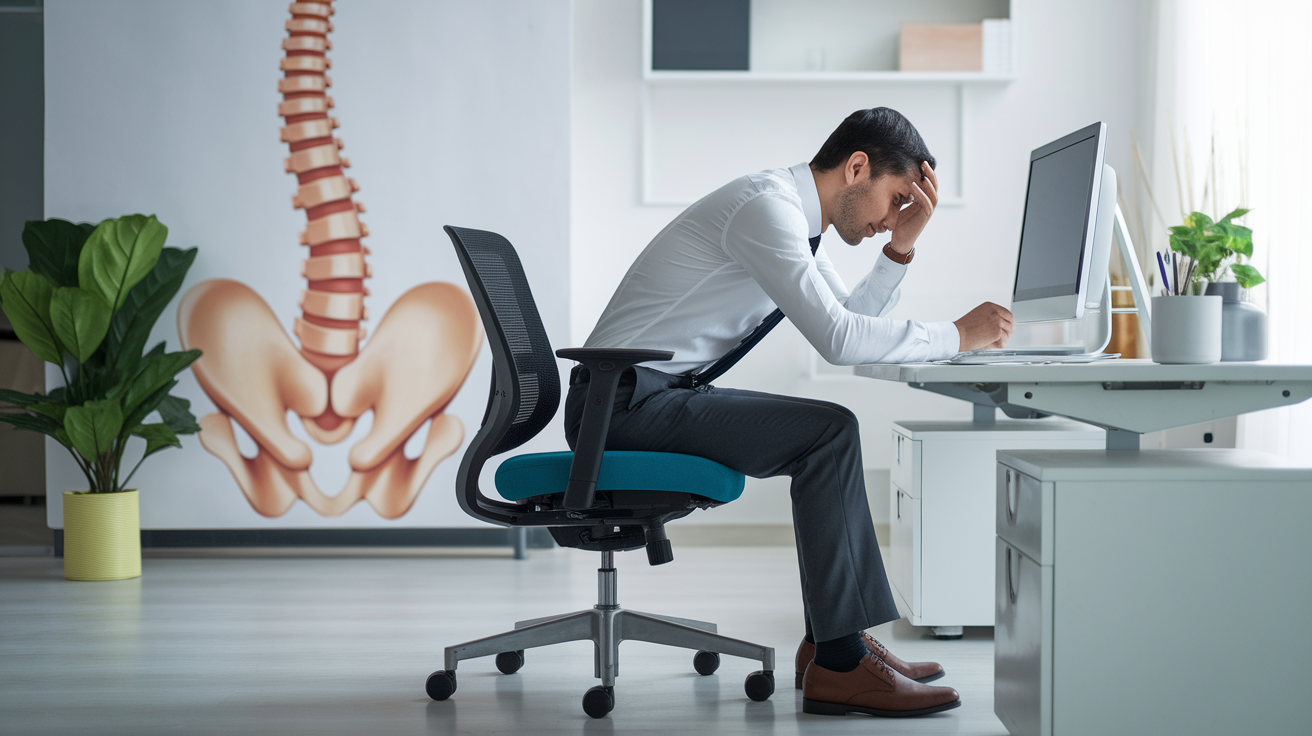
Tailbone pain caused by prolonged sitting is a growing concern among office professionals, IT employees, drivers, students, and anyone whose daily routine involves prolonged sitting. What often begins as mild discomfort after long hours at a desk or behind the wheel can gradually turn into persistent coccyx pain, making sitting, driving, working, and even resting extremely uncomfortable.
Many individuals ignore the early warning signs or depend on painkillers and cushions, assuming the discomfort will resolve on its own. However, prolonged pressure on the coccyx without correcting posture, muscle imbalance, or alignment issues can lead to chronic tailbone pain. Seeking early, structured care through coccydynia and tailbone pain treatment programs helps address the root cause before the condition worsens.
This detailed guide explains why tailbone pain increases with long sitting hours, the underlying causes, and the most effective non-surgical treatment and sitting solutions available.
Why Sitting for Long Hours Triggers Tailbone Pain
The coccyx, or tailbone, is designed to assist with balance and weight distribution when sitting. Ideally, body weight should be supported by the sitting bones and thighs. However, prolonged sitting, especially with poor posture, shifts excessive pressure directly onto the coccyx.
Key reasons sitting worsens tailbone pain include:
-
- Leaning backward or slouching while seated
-
- Sitting on hard or poorly cushioned chairs
-
- Lack of lumbar and pelvic support
-
- Minimal movement during long sitting periods
-
- Continuous vibration during long drives
Over time, this constant pressure causes inflammation, restricted coccyx mobility, and irritation of surrounding ligaments and muscles.

Early Symptoms You Should Not Ignore
Tailbone pain caused by prolonged sitting often presents subtly at first and progressively worsens.
Common symptoms include:
-
- Pain after sitting for 20–30 minutes
-
- Sharp discomfort while standing up from a chair
-
- Pain during long drives or office work
-
- Tenderness at the base of the spine
-
- Relief when standing or lying down
Ignoring these signs allows inflammation and misalignment to persist, increasing the risk of chronic coccydynia.
For a broader explanation of sitting-related coccyx discomfort, including common causes and symptoms, read our guide on tailbone pain while sitting.
Hidden Causes Behind Sitting-Related Tailbone Pain
1. Poor Sitting Posture
Slouched posture places backward pressure on the coccyx instead of distributing weight evenly through the pelvis.
2. Office Ergonomics Issues
Incorrect chair height, unsupported lower back, and poorly positioned screens force the spine into harmful positions.
3. Long-Hour Driving
Drivers experience constant vibration and static posture, both of which increase coccyx stress.
4. Weak Core and Pelvic Muscles
Weak stabilizing muscles reduce spinal support, increasing tailbone load during sitting.
5. Undiagnosed Coccyx Misalignment
Abnormal coccyx movement may only be visible during sitting, requiring specialized evaluation.
Why Cushions and Painkillers Alone Are Not Enough
While coccyx cushions and pain medications may offer temporary comfort, they do not correct the underlying cause of tailbone pain. Once the individual resumes long sitting hours, the pain often returns.
According to MedlinePlus, conservative management focusing on posture correction and rehabilitation is the recommended first approach for tailbone pain.
True recovery requires correcting posture, improving muscle support, and restoring natural coccyx movement.
The Importance of Proper Diagnosis
Effective tailbone pain when sitting for long hours treatment starts with identifying the exact cause of pain. Treating symptoms without diagnosis often leads to recurrence.
Specialized assessment may include:
-
- Sitting and standing posture analysis
-
- Functional movement evaluation
-
- Dynamic coccyx mobility assessment
-
- Advanced imaging when necessary
Detailed diagnostic evaluations are available through advanced tailbone pain diagnostic services that help identify coccyx instability, inflammation, or alignment issues accurately.