Coccyx Pain (Tailbone Pain): Causes, Symptoms & Treatment
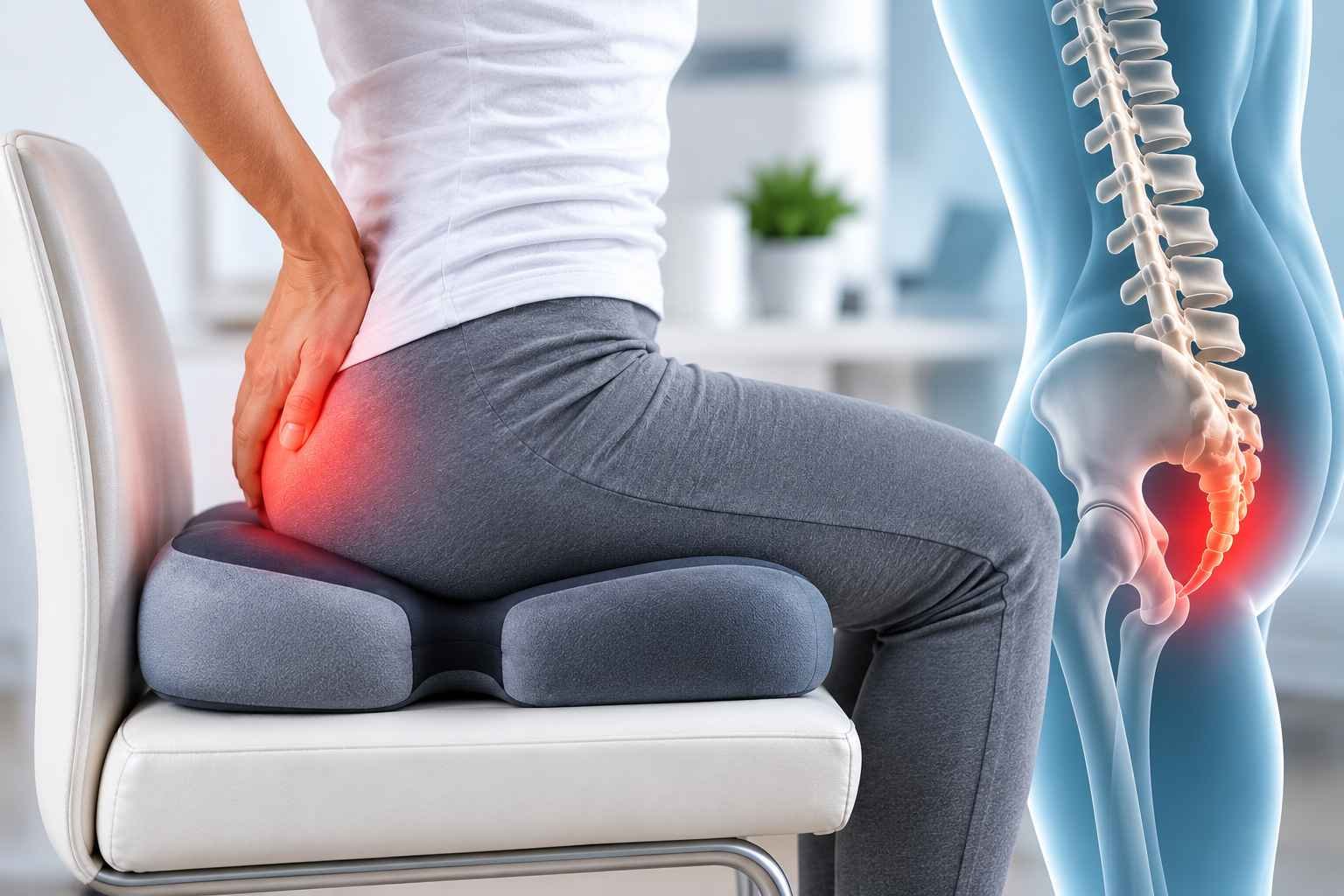
Table of Contents
- What Is Coccydynia?
- Common Causes of Tailbone Pain While Sitting
- Why Sitting Makes Tailbone Pain Worse
- Treatment Approach for Tailbone Pain
- Manual Coccyx Mobilization
- Pelvic Rehab Program
- Ergonomic & Lifestyle Coaching
- When to Seek Help
- Conclusion
Tailbone pain while sitting, also called
coccydynia, can turn everyday activities such as sitting,
driving, or working into a painful experience. The discomfort occurs around
the coccyx, the small triangular bone located at the base of the spine. It
may feel dull, sharp, or even burning and can become worse when sitting,
standing up from a seated position, or leaning backward. Understanding what
may be causing the pain and addressing the contributing factors can help in
choosing an appropriate treatment approach.
What Is Coccydynia and Tailbone Pain While Sitting?
Coccydynia is pain that develops in or around the coccyx at the end of the
spine. The intensity and type of discomfort can vary, but people commonly
notice pain while sitting, rising from a seated position, or leaning backward.
For some people, tailbone pain while sitting can make
everyday activities such as desk work, travelling, or driving increasingly
uncomfortable.
Common Causes of Tailbone Pain While Sitting
Several factors may contribute to tailbone or coccyx pain, including:
- Sitting on hard or uneven surfaces
- Falls or trauma
- Post-childbirth strain
- Poor posture
- Internal misalignment of the coccyx
- Unknown causes, also referred to as idiopathic causes
The underlying cause can differ from one person to another, so persistent
tailbone pain while sitting may require an individualized
assessment.
Why Tailbone Pain While Sitting Gets Worse
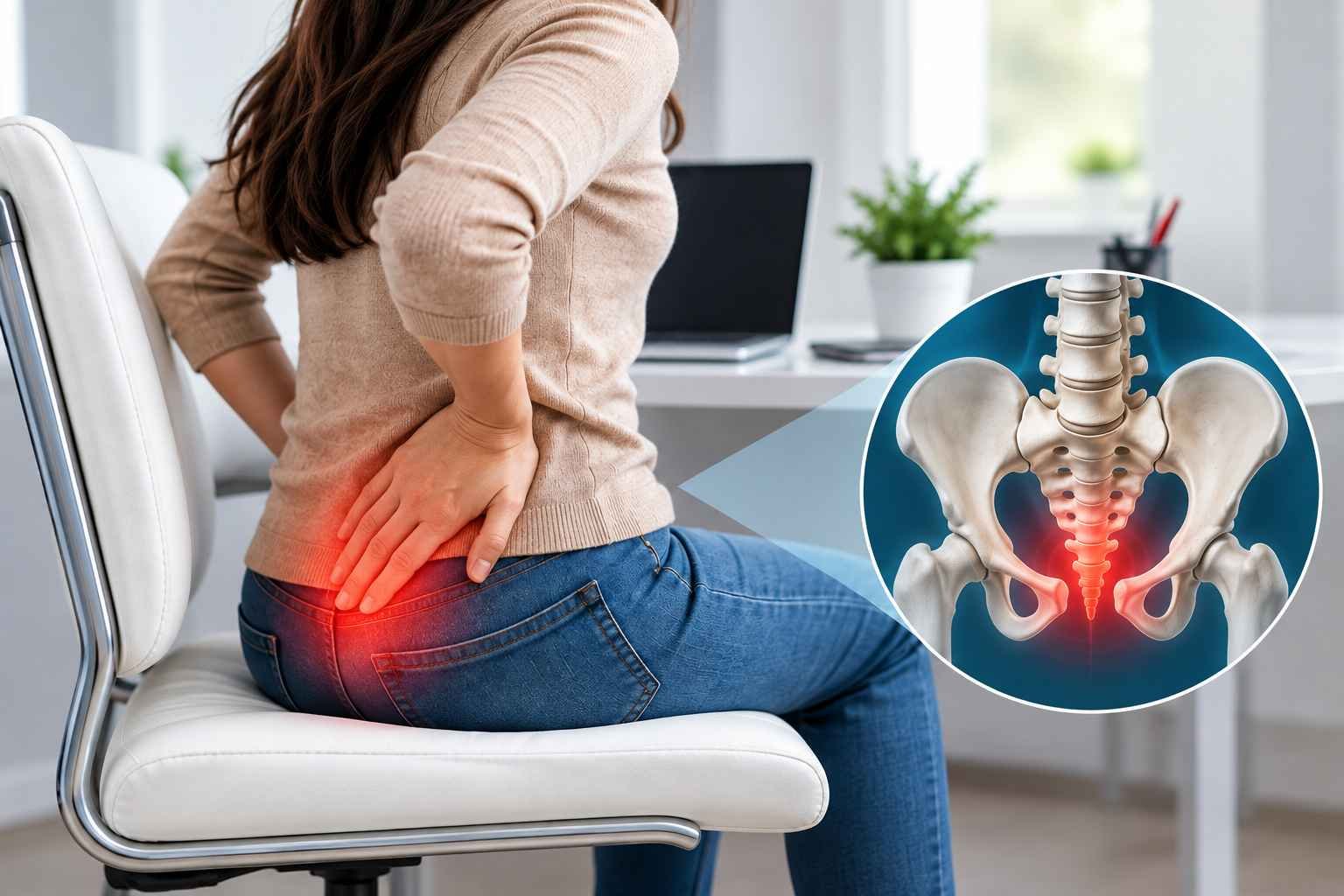
The coccyx experiences direct pressure when a person sits. If the tailbone
is inflamed or misaligned, this pressure can make the discomfort more
noticeable.
Without correction, continued pressure may contribute to chronic pain, tight muscles, and altered movement patterns. This is why people experiencing coccydynia may notice that symptoms become particularly uncomfortable during prolonged sitting.
For more specific guidance, read our article on tailbone pain when sitting for long hours.
Treatment Approach for Tailbone Pain
As a physiotherapist specializing in coccydynia,
Dr. Syeda Mubashira (PT) uses a structured approach to
tailbone pain treatment focused on the factors contributing to the patient’s
symptoms.
The treatment approach may include manual coccyx mobilization, a pelvic
rehabilitation program, and ergonomic and lifestyle guidance.
Manual Coccyx Mobilization
Manual coccyx mobilization is a targeted internal technique used to address
coccyx alignment and relieve pressure.
The technique is performed professionally and ethically and always with
informed consent.
Pelvic Rehab Program
A customized pelvic rehabilitation program may include exercises designed
to activate, stabilize, and strengthen the core-pelvic region.
The program is selected according to the individual’s needs rather than
using the same rehabilitation approach for every patient.
Ergonomic & Lifestyle Coaching
Sitting habits and posture can influence pressure around the coccyx.
Ergonomic and lifestyle guidance may therefore include:
- Postural training
- Use of coccyx cushions
- Sitting adaptations
These adjustments can support the overall management of tailbone discomfort
during everyday activities.
When to Seek Help for Tailbone Pain While Sitting
Persistent tailbone pain while sitting should not be
ignored. Consider consulting a specialist if:
- Pain continues for more than 2–3 weeks
- Sitting becomes unbearable
- Pain radiates toward the hips, back, or thighs
- You have already tried treatments without getting results
An assessment can help identify factors that may be contributing to persistent coccyx pain and guide the appropriate treatment approach. Learn more about our tailbone pain diagnostic services for evaluating persistent symptoms.
Conclusion
Coccydynia is a real but treatable condition. Persistent
tailbone pain while sitting can interfere with sitting,
working, driving, and other everyday activities, but it does not have to be
managed with painkillers alone.
With an appropriate assessment and focused care, treatment may address
factors such as coccyx alignment, the core-pelvic region, posture, and
sitting habits. Seeking help when symptoms continue can support a more
structured approach to managing tailbone pain.
Contact Dr. Syeda Mubashira (PT)
Tailbone Pain Treatment Partners Clinic
JP Nagar, Bangalore
Phone:
+91 9986632631
Email:
official.tailbonepaintreatment@gmail.com