Medicine for Tailbone Pain: Options, Safety and When to See a Doctor

Tailbone pain can make everyday activities such as sitting, working, or getting up from a chair uncomfortable. When the pain continues, many people look for medicine for tailbone pain to help manage their symptoms.
Different types of medicines may be used to manage tailbone discomfort, but their suitability depends on the individual’s health, symptoms, and possible underlying cause.
Some medicines may provide temporary relief, while others may not be appropriate for certain people. It is important to understand the available options and their limitations before taking medication.
This article explains commonly used medicines for tailbone pain, important safety considerations, and when medical advice may be necessary.
Table of Contents
Can Medicine Help With Tailbone Pain?
Common Types of Medicine for Tailbone Pain
Which Medicine Is Best for Tailbone Pain?
How Long Can You Take Medicine for Tailbone Pain?
Can Tailbone Pain Medicine Cause Side Effects?
What If Medicine Does Not Relieve Tailbone Pain?
Are Steroid Injections the Same as Tailbone Pain Medicine?
When Should You Consult a Doctor?
Frequently Asked Questions About Tailbone Pain Medicine
Conclusion
Can Medicine Help With Tailbone Pain?
Medicine may help reduce pain or inflammation associated with the tailbone, also called the coccyx.
However, the response to medication can vary. Some people may experience temporary relief, while others may continue to have discomfort despite taking medicine.
Medication generally focuses on managing symptoms. It may not address an underlying structural problem or another condition contributing to the pain.
The choice of medicine depends on factors such as:
The severity and duration of the pain
Whether inflammation may be contributing to symptoms
Existing medical conditions
Other medicines the person is taking
Previous reactions or allergies to medication
A healthcare professional can help determine whether medication is appropriate.
Common Types of Medicine for Tailbone Pain
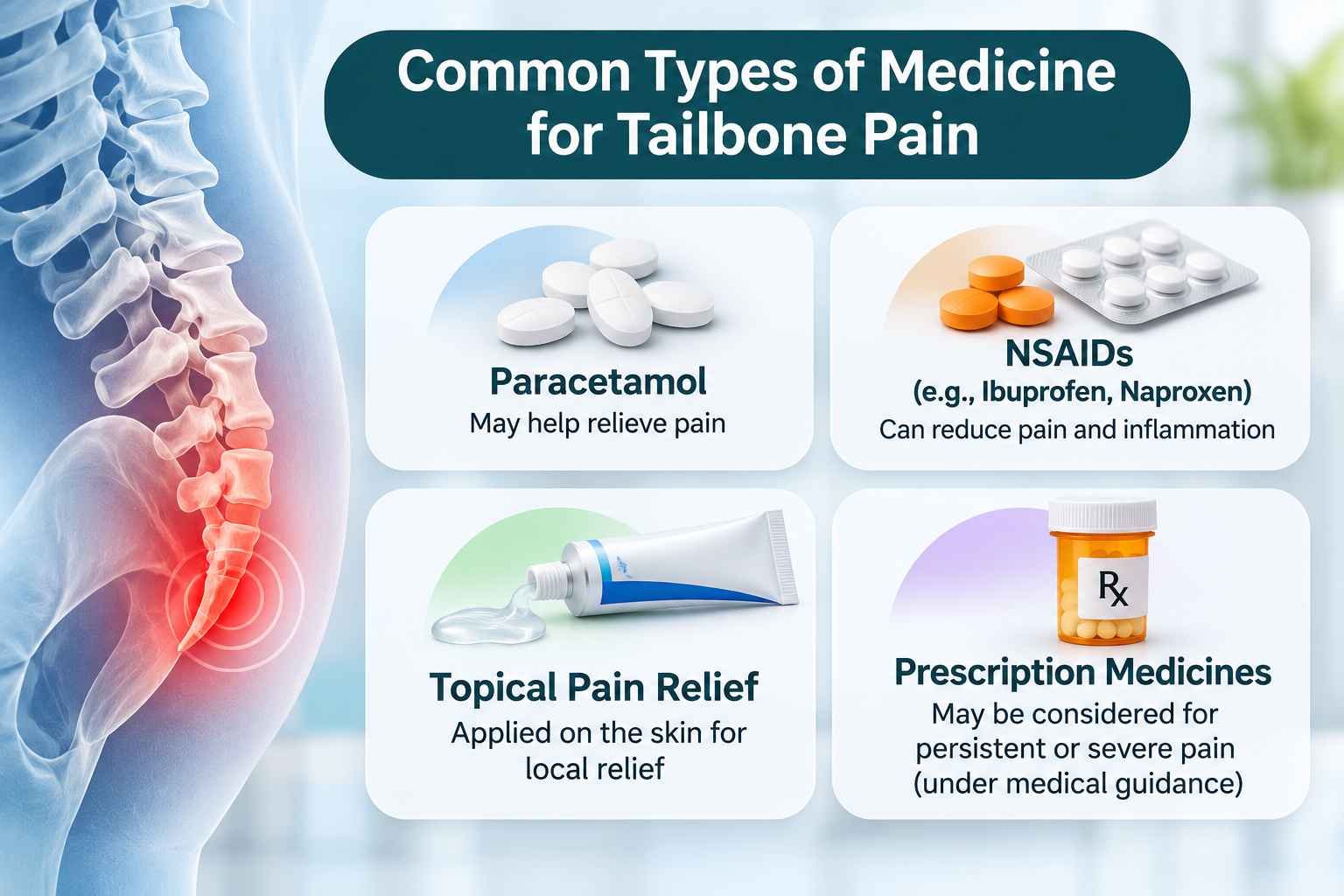
Several categories of medicines may be considered for managing coccyx pain. These medicines work differently and have their own precautions.
1. Paracetamol (Acetaminophen)
Paracetamol is a commonly used pain-relieving medicine. It may be considered for mild to moderate tailbone discomfort.
It works primarily by reducing the sensation of pain rather than directly treating inflammation.
Although paracetamol is widely available, taking more than the recommended amount can cause serious liver damage. People with liver conditions or those taking other medicines containing paracetamol should be particularly careful.
Paracetamol may help some people manage discomfort, but it does not treat the underlying cause of tailbone pain.
2. Non-Steroidal Anti-Inflammatory Drugs (NSAIDs)
Non-steroidal anti-inflammatory drugs, commonly called NSAIDs, are medicines that can help reduce pain and inflammation.
Examples include:
Ibuprofen
Naproxen
Diclofenac
These medicines may be considered when inflammation is thought to contribute to the discomfort.
However, NSAIDs are not suitable for everyone. They can cause stomach irritation or bleeding and may affect kidney function. They may also be inappropriate for people with certain heart conditions, a history of stomach ulcers, or those taking particular medications.
The risks can increase with higher doses or prolonged use.
NSAIDs should be used only according to appropriate medical or pharmacist guidance and the product instructions.
For additional information about tailbone pain and general management approaches, the NHS guide to tailbone pain provides patient-oriented information.
3. Topical Pain Relief Medicines
Topical medicines are applied to the skin rather than taken by mouth.
Some topical products contain anti-inflammatory ingredients, while others contain substances intended to provide localized pain relief.
Examples may include certain diclofenac gels or other topical analgesic preparations.
These products may be useful for some types of musculoskeletal discomfort, but their effectiveness for pain originating deep around the coccyx is less certain.
Skin irritation or allergic reactions are possible, and some products may not be suitable for particular medical conditions.
A pharmacist or healthcare professional can advise whether a topical product is appropriate.
4. Prescription Pain Medicines
When pain is persistent or difficult to manage, a doctor may consider prescription medication based on the clinical assessment.
The choice depends on the suspected source of pain, medical history, and potential risks.
Some prescription medicines can cause drowsiness, dizziness, constipation, or other adverse effects. Certain stronger pain medicines also carry risks of dependence and overdose.
Prescription medicines should not be started, shared, or adjusted without medical supervision.
Which Medicine Is Best for Tailbone Pain?
There is no single medicine that can be considered the best option for every person experiencing tailbone pain.
For some individuals, a commonly available pain reliever may be appropriate for short-term symptom management. Others may need a different approach depending on their health conditions and the reason for their pain.
The effectiveness of a medicine can also depend on whether the discomfort is associated with inflammation, injury, persistent pain, or another condition.
Rather than choosing a medicine based only on symptom descriptions found online, it is safer to discuss suitable options with a qualified healthcare professional.
How Long Can You Take Medicine for Tailbone Pain?
The appropriate duration depends on the medicine, the reason it is being used, and the person’s medical circumstances.
Some pain-relieving medicines are intended for short-term use. Taking them for longer than recommended may increase the likelihood of side effects.
If tailbone pain continues despite using an appropriate medicine, repeatedly taking additional medication without assessment may not be the best approach.
Persistent symptoms may require further evaluation to understand why the pain is continuing.
Can Tailbone Pain Medicine Cause Side Effects?
Yes. Even commonly used pain-relieving medicines can cause side effects.
Potential concerns include:
| Medicine category | Possible safety concerns |
|---|---|
| Paracetamol | Liver damage if too much is taken |
| Oral NSAIDs | Stomach irritation, bleeding, kidney problems, or cardiovascular risks |
| Topical medicines | Skin irritation or allergic reactions |
| Prescription pain medicines | Side effects vary; some can cause sedation, constipation, or dependence |
Not everyone will experience these effects, and the risks depend on the specific medicine, dose, duration, and individual health circumstances.
People who are pregnant, breastfeeding, taking blood thinners, or living with kidney, liver, stomach, or cardiovascular conditions should seek professional advice before using pain medicines.
What If Medicine Does Not Relieve Tailbone Pain?
Sometimes tailbone discomfort continues even after a person has tried medication.
This does not necessarily mean the condition is serious, but persistent symptoms may indicate that medication alone is not sufficient to manage the problem.
A healthcare professional may review the history of the pain, examine the affected area, and determine whether further assessment is needed.
Depending on the findings, other management approaches may be considered.
For information about broader management options, read our guide to Coccydynia and Tailbone Pain Treatment.
Are Steroid Injections the Same as Tailbone Pain Medicine?
Steroid injections are different from medicines taken orally or applied to the skin.
In selected cases, a clinician may consider an injection when symptoms persist and the assessment suggests it could be appropriate.
However, injections are not necessary for everyone, and they have potential risks and limitations.
The decision should be based on an individual medical assessment rather than the duration of pain alone.
For a more detailed explanation, read our article on Steroid Injections for Tailbone Pain.
When Should You Consult a Doctor?
Medical advice may be appropriate if tailbone pain:
Continues or becomes more severe despite appropriate short-term pain management
Starts after a significant fall or injury
Interferes with sitting, sleeping, working, or everyday activities
Occurs with fever, unexplained weight loss, or other unusual symptoms
Is accompanied by increasing swelling, redness, or other concerning changes
New bowel or bladder control problems, numbness around the groin or saddle area, or significant leg weakness require urgent medical evaluation.
A clinical assessment can help determine whether medication, further investigation, or another management approach is appropriate.
Frequently Asked Questions About Tailbone Pain Medicine
What medicine is commonly used for tailbone pain?
Paracetamol and certain NSAIDs are commonly used medicines for managing musculoskeletal pain. Whether they are appropriate for tailbone pain depends on the individual’s symptoms, medical history, and other medications.
Can ibuprofen help with tailbone pain?
Ibuprofen may help reduce pain and inflammation in some people. However, it is not suitable for everyone and may cause side effects, particularly in people with certain medical conditions.
Is paracetamol useful for coccyx pain?
Paracetamol may provide temporary pain relief for some individuals. It does not directly treat inflammation or correct an underlying cause of coccyx pain.
Can I take medicine for tailbone pain every day?
Daily or prolonged use should not be assumed to be safe. The appropriate duration depends on the medicine and individual circumstances. Persistent pain should be discussed with a healthcare professional.
Is there a specific tablet for coccyx pain?
There is no universally recommended tablet specifically for coccyx pain. Healthcare professionals may consider different pain-relieving medicines depending on the clinical situation.
Can tailbone pain improve without medication?
Some cases may improve over time without medication, depending on the cause and severity. However, ongoing or worsening pain should be evaluated rather than ignored.
Conclusion
Medicine for tailbone pain may help some people manage discomfort, but the results and suitability of different medications can vary.
Common pain-relieving medicines, including paracetamol and NSAIDs, have potential benefits as well as safety considerations. Medication may provide temporary symptom relief without necessarily resolving the underlying cause of pain.
If tailbone pain persists, worsens, or interferes with everyday activities, seeking professional assessment may help identify an appropriate next step.
For an individual evaluation, you can contact Tailbone Pain Treatment Clinic.
Medical disclaimer: This article is intended for general educational purposes only and is not a substitute for professional medical advice, diagnosis, or treatment. Do not start, stop, or change medication based solely on this information. Consult a qualified healthcare professional for advice relevant to your medical circumstances.