Tailbone Massage for Pain Relief: Benefits, Safety and Precautions
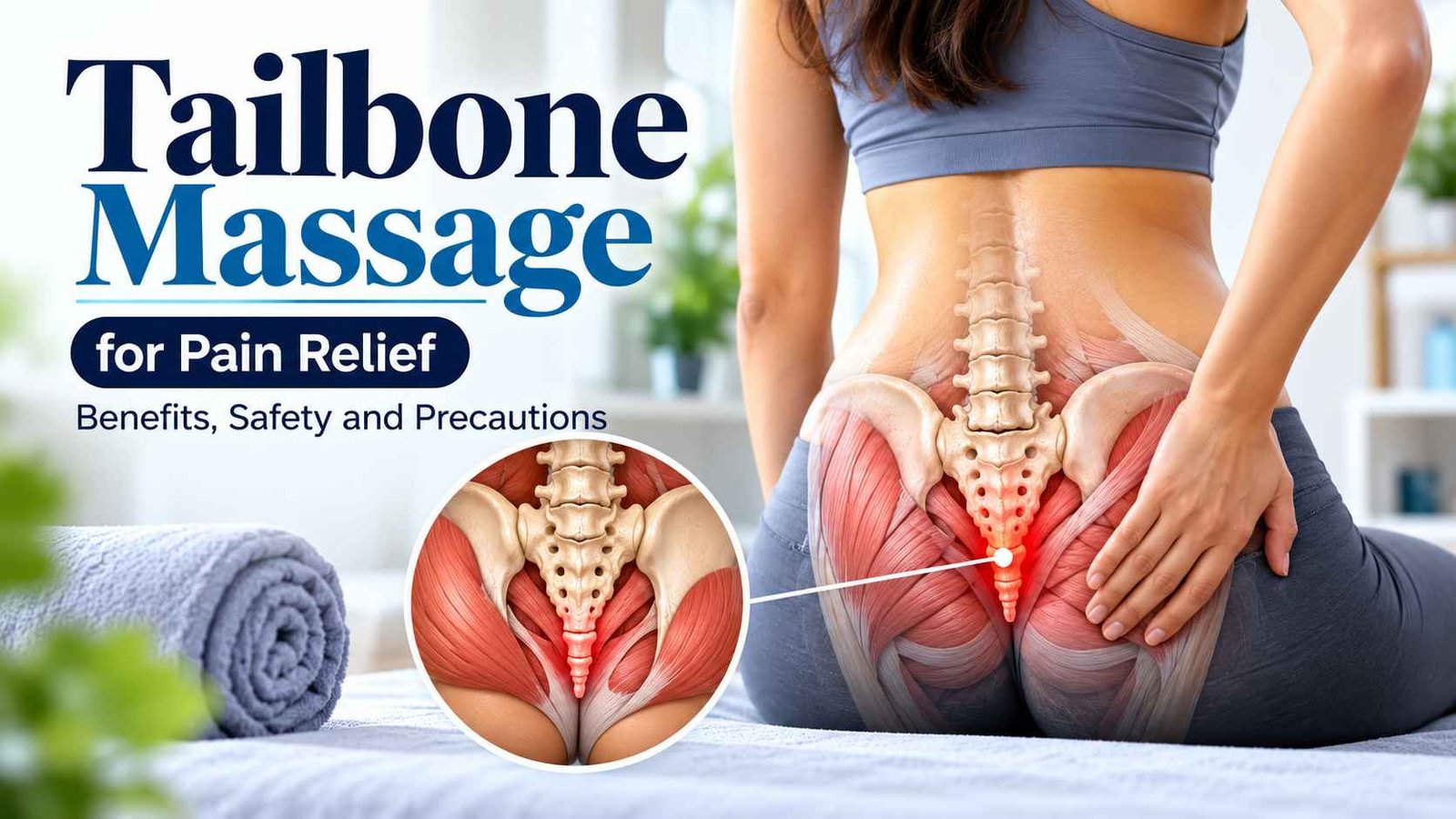
Tailbone massage may help relieve discomfort associated with tight or sensitive muscles surrounding the coccyx, particularly when muscle tension contributes to the pain. However, massage is not suitable for every type of tailbone pain, and applying direct pressure to an injured or painful coccyx can make symptoms worse.
The tailbone, medically known as the coccyx, is located at the bottom of the spine. Pain in this region, called coccydynia, can affect sitting, standing, and everyday movement.
Some people explore massage for tailbone pain as a non-surgical approach to managing discomfort. Although certain manual therapy techniques may help selected patients, the effectiveness of massage depends on the underlying cause of the pain, the technique used, and whether the treatment is appropriate for the individual.
This guide explains how tailbone massage works, its potential benefits, how to massage the surrounding area safely, when professional treatment may be helpful, and which precautions to follow.
Table of Contents
- What Is Tailbone Massage?
- Can Massage Help Tailbone Pain?
- How to Massage the Tailbone Area Safely
- How Professional Tailbone Massage Therapy Works
- Potential Benefits and Limitations of Tailbone Massage
- When Should You Avoid Tailbone Massage?
- Tailbone Massage vs. Other Non-Surgical Treatments
- When Should You Consult a Healthcare Professional?
- Frequently Asked Questions
What Is Tailbone Massage?
Tailbone massage refers to manual techniques applied to the muscles and soft tissues surrounding the coccyx to address tension, tenderness, or discomfort.
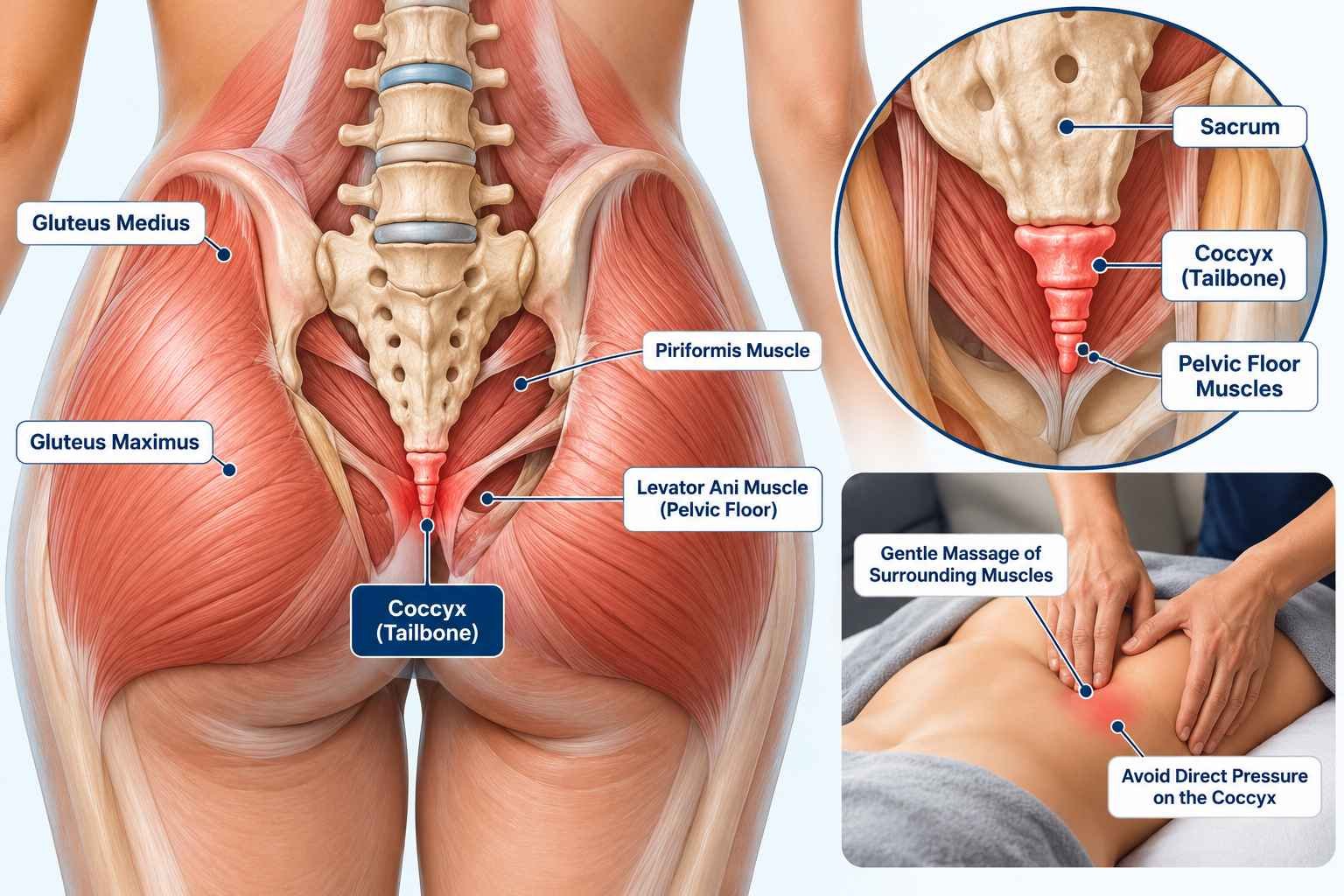
The coccyx is a small bone at the base of the spine that serves as an attachment point for several muscles and ligaments, including structures associated with the pelvic floor.
When muscles around this region become tense or sensitive, they may contribute to discomfort near the tailbone.
Massage techniques may focus on surrounding soft tissues rather than directly pressing on the coccyx.
External Tailbone Massage
External massage involves gentle manipulation of accessible muscles around the buttocks and lower pelvic region.
The aim is to address soft-tissue tension without applying force directly to the tailbone.
Professional Manual Therapy
Some physiotherapists use specialized manual therapy techniques when treating selected patients with coccydynia.
These techniques may involve assessment and treatment of the muscles surrounding the coccyx and pelvic floor.
Certain specialized approaches involve internal techniques, but these should only be considered following appropriate clinical assessment and performed by a suitably trained healthcare professional with informed consent.
Internal tailbone manipulation should never be attempted at home.
For a broader overview of treatment options, explore our guide to coccydynia and tailbone pain treatment.
Can Massage Help Tailbone Pain?
Massage may help some people with tailbone pain, particularly when surrounding muscle tension contributes to their symptoms.
However, not all coccyx pain originates from muscles. Tailbone discomfort may also be associated with injury, inflammation, abnormal coccygeal movement, or other conditions.
For this reason, massage should not be considered a universal treatment for coccydynia.
How Massage May Help
Gentle massage of appropriate surrounding muscles may help reduce perceived muscle tightness and provide temporary comfort.
In selected patients, therapist-guided manual treatment may also help address muscle-related contributors to pain.
However, improvement following massage does not necessarily mean that the underlying cause of coccyx pain has been resolved.
What Does Medical Research Say?
Research suggests that certain physiotherapy and manual therapy interventions may benefit some patients with coccydynia.
A 2025 systematic review of physiotherapy interventions for coccydynia reported potential benefits from several treatment approaches, including selected manual therapy techniques.
However, the available evidence has limitations, and the findings should not be interpreted as proof that ordinary massage reliably treats all causes of tailbone pain.
The NHS guidance on tailbone pain also identifies physiotherapy, including treatment involving the muscles around the coccyx, as a possible option when initial measures are insufficient.
The most appropriate treatment depends on an individual’s symptoms and clinical assessment.
How to Massage the Tailbone Area Safely
People searching for how to massage the tailbone should understand that the coccyx itself is not an area where forceful pressure or manipulation is recommended.
If a healthcare professional has confirmed that gentle external massage is appropriate, the focus should remain on accessible surrounding muscles rather than directly pressing on the bone.
Step 1: Choose a Comfortable Position
Lie on your side or use another comfortable position that avoids direct pressure on the coccyx.
The position should allow the surrounding muscles to relax without increasing pain.
Step 2: Identify the Surrounding Soft Tissues
Focus on the fleshy muscles of the buttocks rather than the bony tailbone or the sensitive area immediately over it.
Avoid applying pressure to bruised, swollen, injured, or unusually tender areas.
Step 3: Use Gentle Pressure
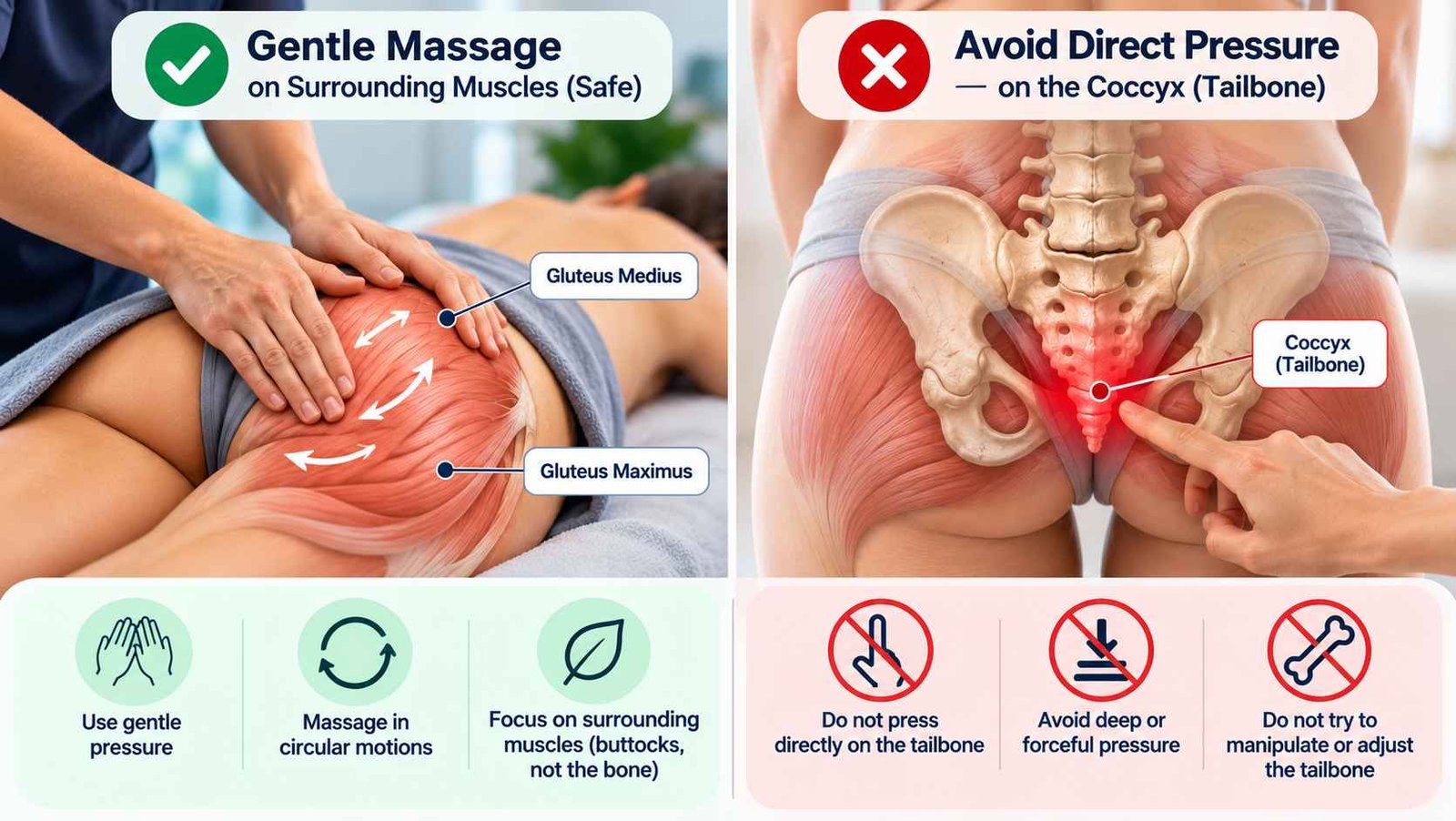
If massage has been recommended as appropriate, light circular movements over the surrounding gluteal muscles may be used.
The pressure should remain comfortable.
Do not press directly on the coccyx, attempt to move the bone, or use deep-tissue techniques over the painful area.
Step 4: Monitor Your Symptoms
Stop immediately if massage causes sharp pain, increased tenderness, tingling, numbness, or worsening discomfort.
Massage should not be continued simply because a painful area feels tight.
Step 5: Seek Professional Guidance if Pain Persists
If symptoms continue, recur, or worsen, a healthcare professional can assess whether muscle tension is contributing to the discomfort.
Persistent tailbone pain may require a different treatment approach.
Important: These precautions apply only to gentle external soft-tissue massage. They are not instructions for treating an injured coccyx or performing coccygeal manipulation.
How Professional Tailbone Massage Therapy Works
Professional tailbone massage therapy may form part of a broader physiotherapy treatment plan.
A qualified healthcare professional first evaluates the patient’s symptoms to determine whether manual therapy is appropriate.
Initial Assessment
The assessment may include questions about:
- The location and duration of the pain.
- Whether symptoms began after an injury.
- Activities that worsen or relieve discomfort.
- Previous treatment and response.
- Associated symptoms that may require further investigation.
The clinician may also examine relevant muscles, movement patterns, and areas of tenderness.
Identifying Muscle-Related Pain
Some patients experience tenderness or increased muscle tension in tissues surrounding the coccyx.
A physiotherapist may assess whether these findings are contributing to the patient’s symptoms.
However, muscle tenderness alone does not establish the cause of coccydynia.
Selecting Appropriate Manual Techniques
When suitable, treatment may involve gentle external soft-tissue techniques or other clinician-directed interventions.
Specialized pelvic floor manual therapy may be considered in selected cases, but it requires appropriate training, clinical justification, and patient consent.
Monitoring Treatment Response
The clinician should reassess symptoms and functional improvement over time.
If massage does not help or causes worsening pain, the treatment plan may need to change.
Potential Benefits and Limitations of Tailbone Massage
Tailbone massage may offer symptom relief in selected cases, but understanding its limitations is important.
Potential Benefits
When muscle tension contributes to discomfort, appropriate massage may help with:
- Temporary reduction in muscle tightness.
- Relief of some surrounding soft-tissue discomfort.
- Improved comfort during gentle movement.
- Relaxation of tense muscles around the buttocks.
- Supporting a broader physiotherapy program.
These benefits are not guaranteed and may vary between individuals.
Limitations of Massage Therapy
Massage does not necessarily correct the underlying cause of tailbone pain.
For example, it should not be expected to repair a fracture, reposition a displaced coccyx, or resolve every cause of persistent coccydynia.
Massage may also provide little benefit when pain primarily originates from the coccyx itself rather than surrounding muscles.
Can Massage Cure Tailbone Pain Permanently?
There is insufficient evidence to claim that massage permanently cures coccydynia.
Some patients may experience temporary relief, while others require different treatments.
The long-term outcome depends on the underlying condition and the suitability of the overall management plan.
When Should You Avoid Tailbone Massage?
Massage may be inappropriate or potentially harmful in certain situations.
Avoid massaging the painful area without medical assessment if any of the following applies.
Recent Tailbone Injury
If tailbone pain began after a fall, accident, or direct impact, avoid massage until an appropriate assessment has ruled out injuries that could be aggravated by pressure.
Suspected Fracture or Dislocation
Direct massage or manipulation should not be used to treat a suspected coccyx fracture or dislocation.
These conditions require appropriate medical evaluation.
Severe or Worsening Pain
Pain that is severe, unexplained, or progressively worsening should be assessed rather than repeatedly massaged.
Skin Infection or Open Wounds
Avoid massage over areas with infection, open wounds, significant swelling, or unusual skin changes.
Neurological or Other Concerning Symptoms
Seek prompt medical attention if tailbone pain is accompanied by new leg weakness, significant numbness, or other concerning neurological symptoms.
New loss of bladder or bowel control, difficulty passing urine, or numbness around the groin or saddle area requires emergency medical assessment.
Massage is not an appropriate response to these symptoms.
Tailbone Massage vs. Other Non-Surgical Treatments
Massage is only one possible component of conservative care for tailbone-related discomfort.
Other approaches may be more appropriate depending on the cause of pain.
| Treatment Approach | Primary Purpose |
|---|---|
| Tailbone massage | Address selected muscle-related tension or discomfort |
| Physiotherapy | Assess movement, muscle function, and relevant physical contributors |
| Pressure-relieving cushions | Reduce pressure on the coccyx while sitting |
| Activity modification | Limit activities that aggravate symptoms |
| Medication | Manage pain or inflammation when clinically appropriate |
| Selected injections | Address persistent symptoms in appropriately evaluated patients |
The best approach depends on the patient’s diagnosis and medical history.
Massage should not replace appropriate evaluation or treatment when symptoms suggest an underlying injury or another medical condition.
For a more comprehensive discussion of conservative management, read our article on tailbone pain treatment without surgery in Bangalore.
When Should You Consult a Healthcare Professional?
Occasional mild discomfort may improve with appropriate self-care. However, persistent or recurring tailbone pain should not be ignored.
Consider seeking professional evaluation if:
- Tailbone pain continues for several weeks.
- Sitting or everyday activities become increasingly difficult.
- Pain began after an injury.
- Symptoms worsen despite avoiding aggravating activities.
- Massage repeatedly increases discomfort.
- You are unsure whether the pain originates from the coccyx or surrounding tissues.
A healthcare professional can evaluate possible causes and determine whether massage, physiotherapy, or another treatment is appropriate.
You can learn more about the evaluation process through our diagnostic services.
Frequently Asked Questions About Tailbone Massage
1. How Do You Massage Your Tailbone?
If gentle external massage has been recommended by a healthcare professional, it should focus on the surrounding gluteal muscles rather than direct pressure on the coccyx. Avoid forceful movements, deep pressure, or attempts to manipulate the tailbone.
2. Can Massage Help Tailbone Pain?
Massage may provide temporary relief when muscle tension contributes to tailbone discomfort. However, its effectiveness depends on the underlying cause of pain, and it is not suitable for every patient.
3. Can You Massage a Tailbone at Home?
Gentle external massage of surrounding muscles may be appropriate for some people after professional guidance. Direct coccyx manipulation, aggressive massage, and internal techniques should not be attempted at home.
4. Can Tailbone Massage Make Pain Worse?
Yes. Excessive pressure, inappropriate techniques, or massage over an injured coccyx may increase pain. Stop if symptoms worsen and seek medical advice when necessary.
5. Can Massage Fix a Misaligned Tailbone?
Massage has not been established as a reliable method for correcting coccygeal misalignment. Attempting to reposition the coccyx yourself can cause injury. Suspected structural abnormalities require professional evaluation.
6. How Often Should You Massage the Tailbone Area?
There is no universally recommended frequency for tailbone massage. The appropriate approach depends on the patient’s symptoms, underlying condition, and response to treatment. A qualified healthcare professional can provide individualized guidance.
7. Can Tailbone Massage Relieve Pain in 30 Seconds?
There is no reliable evidence that massage can consistently relieve tailbone pain within 30 seconds. Some people may experience temporary comfort from gentle muscle relaxation, but persistent symptoms require appropriate assessment.
8. Is Professional Tailbone Massage Better Than Self-Massage?
Professional assessment is particularly important when the cause of pain is unclear. A qualified clinician can determine whether manual therapy is suitable and avoid techniques that may aggravate the condition.
Conclusion
Tailbone massage may help relieve discomfort when muscle tension contributes to pain around the coccyx. However, massage is not a universal treatment for coccydynia, and its benefits depend on the underlying cause of the symptoms.
Gentle external massage may be appropriate for selected individuals, but direct pressure over the coccyx, forceful manipulation, and untrained internal techniques should be avoided.
People experiencing persistent or worsening symptoms should seek professional assessment rather than relying on massage alone.
For individualized evaluation and guidance about suitable treatment options, you can contact our clinic.
Medical Disclaimer: This article is intended for educational purposes only and does not replace professional medical advice, diagnosis, or treatment.