Steroid Injections for Tailbone Pain: Benefits, Risks, and Effectiveness

Steroid injections for tailbone pain are sometimes considered when persistent coccyx discomfort does not improve with initial conservative treatment. These injections aim to reduce inflammation and provide pain relief, particularly in people experiencing chronic coccydynia.
However, steroid injections are not equally effective for everyone. Some patients experience meaningful relief, while others notice only temporary improvement or little change in their symptoms.
Understanding how these injections work, when they may be appropriate, and what they cannot treat is essential before making a treatment decision.
In this guide, we explain the effectiveness of steroid injections for coccydynia, their potential risks, and the alternative approaches available for managing persistent tailbone pain.
Table of Contents
- What Are Steroid Injections for Tailbone Pain?
- How Do Steroid Injections Work?
- Types of Injections Used for Coccydynia
- How Effective Are Steroid Injections?
- Can Steroid Injections Correct Coccyx Misalignment?
- Potential Side Effects and Risks
- Who May Benefit From Steroid Injections?
- Alternatives to Steroid Injections
- When Should You Consult a Specialist?
- Frequently Asked Questions
What Are Steroid Injections for Tailbone Pain?
Steroid injections are medical procedures that may be used to manage inflammation and pain around the coccyx, commonly known as the tailbone.
The coccyx is located at the bottom of the spine. Pain in this region, called coccydynia, can develop following an injury, prolonged sitting, childbirth, or other conditions affecting the surrounding structures.
Coccydynia may cause discomfort during everyday activities such as:
- Sitting on hard surfaces
- Standing up after prolonged sitting
- Driving or travelling
- Working at a desk
- Performing certain physical activities
When symptoms persist despite initial treatment, a medical specialist may consider an injection as part of a broader pain management plan.
However, injections primarily target pain and inflammation. They do not necessarily resolve the underlying cause of the condition.
For a broader understanding of the condition, read our guide on coccydynia causes, symptoms, and treatment options.
How Do Steroid Injections Work for Coccydynia?
Corticosteroids are anti-inflammatory medications that can help reduce inflammation in targeted tissues.
When administered around an appropriate anatomical structure, they may reduce inflammatory activity and provide temporary or longer-lasting pain relief.
The response depends on several factors, including:
- The underlying cause of tailbone pain
- Duration and severity of symptoms
- Location of the injection
- Presence of inflammation or structural abnormalities
- Individual response to treatment
Steroid injections may also be administered with a local anaesthetic.
The anaesthetic can provide short-term pain relief, while the corticosteroid may take longer to produce its anti-inflammatory effect.
Importantly, pain reduction does not always mean the underlying condition has been corrected.
This distinction is particularly relevant when tailbone pain is associated with abnormal coccyx movement or other structural changes.
Types of Injections Used for Tailbone Pain
Different injection procedures may be considered depending on the suspected source of pain and the patient’s clinical findings.
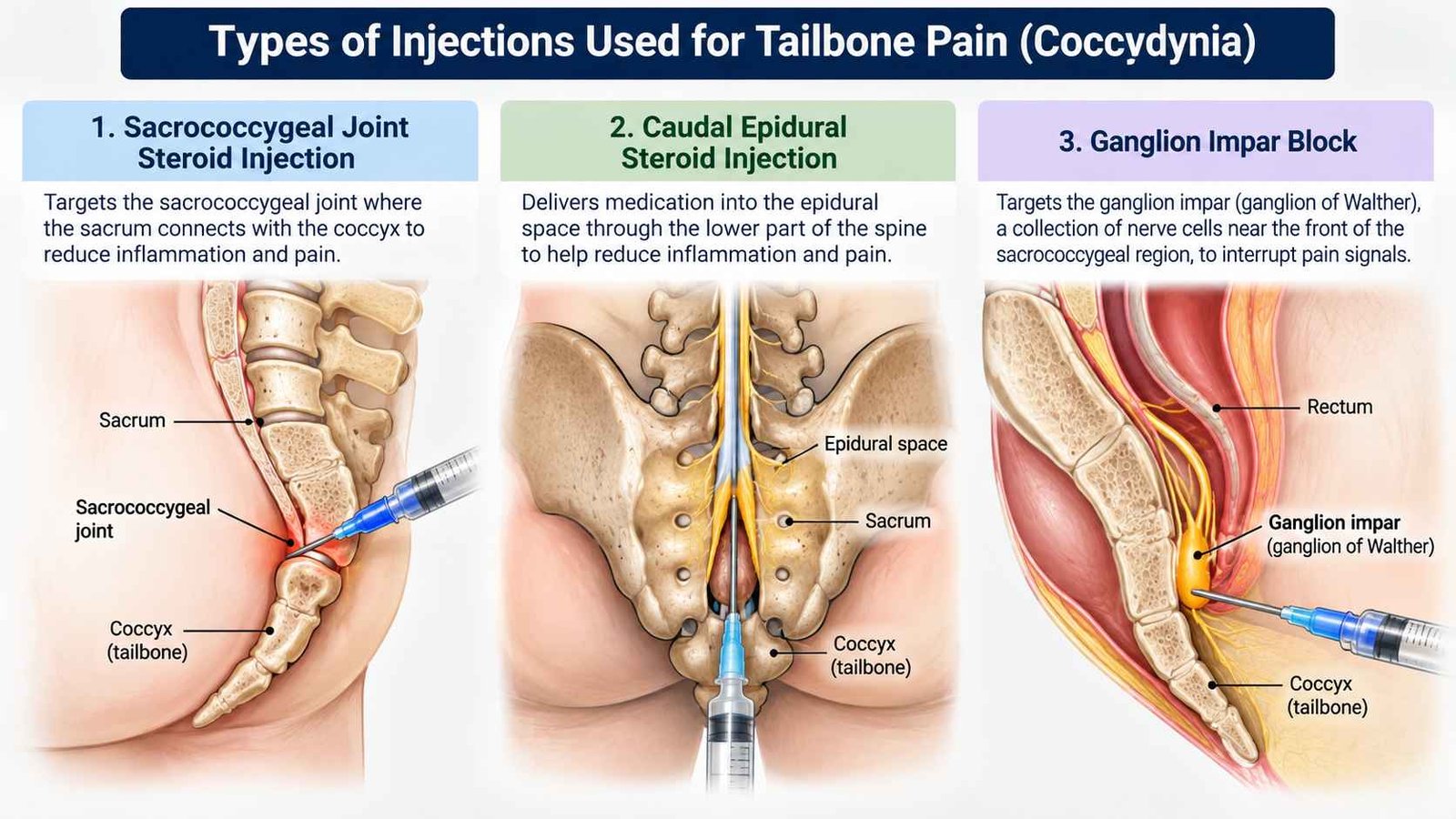
1. Sacrococcygeal Joint Steroid Injections
These injections target the region where the sacrum connects with the coccyx.
They may be considered when pain is thought to originate from the sacrococcygeal joint or nearby structures.
The aim is to reduce inflammation and discomfort around the affected area.
2. Caudal Epidural Steroid Injections
A caudal epidural injection delivers medication into the epidural space through the lower part of the spine.
This procedure may be considered in selected cases, depending on the diagnosis and the suspected source of symptoms.
It is not routinely necessary for every person experiencing coccydynia.
3. Ganglion Impar Block
The ganglion impar is a collection of nerve cells located near the front of the sacrococcygeal region.
A ganglion impar block involves injecting medication near this structure to interrupt pain signals.
This procedure may be considered for selected patients with persistent coccyx or pelvic-region pain.
A ganglion impar block is not the same as a corticosteroid injection into the coccyx joint. The medications and techniques used can differ.
The most appropriate procedure depends on a specialist’s assessment.
How Effective Are Steroid Injections for Tailbone Pain?
The effectiveness of steroid injections for coccydynia varies between patients.
Some individuals report reduced pain and improved sitting tolerance after treatment. Others experience only partial or temporary relief.
Several factors may influence the outcome.
1. The Underlying Cause of Pain
Inflammation-related discomfort may respond differently from pain associated with coccyx instability, abnormal movement, or other structural problems.
2. Duration of Symptoms
The length of time a patient has experienced pain may influence treatment outcomes.
Long-standing coccydynia can involve multiple contributing factors that may require a broader management approach.
3. Individual Treatment Response
Even patients with similar symptoms may respond differently to the same injection.
Therefore, it is difficult to predict the degree or duration of relief for every individual.
4. Previous Treatment History
A patient’s response to physiotherapy, activity modification, medication, or previous injections may help guide further treatment decisions.
What Does Research Suggest?
Published research indicates that injection-based treatments can provide relief for some people with coccydynia. However, the available studies differ in their methods, patient populations, and injection techniques.
Consequently, the evidence does not establish that steroid injections consistently provide permanent relief for all patients.
A systematic review of coccydynia treatments discusses several approaches, including injection-based interventions and conservative management.
Research reference: Coccydynia Treatment: A Systematic Review and Meta-Analysis
The main takeaway is that treatment should be individualized rather than assuming that one procedure will work for everyone.
Can Steroid Injections Correct Coccyx Misalignment?
No. Steroid injections do not physically reposition or correct the alignment of the coccyx.
This is an important distinction when evaluating treatment options.
Some patients experience tailbone pain associated with abnormal coccyx mobility, instability, or changes in its position.
An injection may help reduce pain associated with these conditions, but it does not directly correct the underlying structural abnormality.
For example, if imaging identifies abnormal coccyx angulation, an injection cannot be expected to change the bone’s position.
However, abnormal findings on imaging do not automatically mean that a structural abnormality is responsible for every patient’s symptoms.
Clinical examination and appropriate investigations are necessary to understand the relationship between imaging findings and pain.
Why Accurate Diagnosis Matters
Before considering invasive pain-relief procedures, identifying the likely source of symptoms is essential.
Assessment may include:
- Reviewing the history of injury or childbirth
- Evaluating sitting-related symptoms
- Examining posture and movement
- Assessing relevant musculoskeletal factors
- Considering imaging when clinically indicated
In selected cases, sitting and standing radiographs may help identify abnormal coccyx movement.
Learn more about our tailbone pain diagnostic services and how assessment can guide treatment decisions.
Potential Side Effects and Risks of Steroid Injections
Like other medical procedures, steroid injections carry potential risks.
The likelihood and severity of complications depend on the procedure, medication, patient characteristics, and injection technique.
Common Temporary Effects
Some patients may experience:
- Temporary discomfort at the injection site
- Local tenderness
- A short-term increase in pain
- Bruising or minor swelling
- Temporary numbness when a local anaesthetic is used
These symptoms are often short-lived, but persistent or worsening symptoms should be assessed.
Less Common but Important Risks
Potential complications may include:
- Infection
- Bleeding
- Allergic reactions
- Nerve injury
- Changes in blood glucose levels
- Local tissue changes associated with corticosteroid exposure
Repeated corticosteroid injections may also carry additional risks, depending on the dose, frequency, and injection site.
Can Burning or Tenderness Continue After an Injection?
Some patients report burning sensations or tenderness following injection procedures.
A temporary increase in discomfort may occur, but persistent burning pain should not automatically be considered a normal or harmless reaction.
Patients experiencing prolonged burning, worsening pain, new weakness, fever, or other concerning symptoms should contact their treating clinician promptly.
The cause needs to be assessed rather than attributed to the steroid injection without further evaluation.
Who May Benefit From Steroid Injections?
Steroid injections may be considered for selected patients when:
- Tailbone pain persists despite appropriate initial treatment
- Clinical findings suggest a potentially responsive pain source
- Symptoms significantly affect daily activities
- A qualified medical specialist determines that an injection is appropriate
However, not every patient with chronic coccydynia requires an injection.
Treatment decisions should consider the patient’s symptoms, examination findings, medical history, and preferences.
A discussion of the expected benefits, uncertainties, and potential complications is essential before proceeding.
Alternatives to Steroid Injections for Tailbone Pain
Many patients can begin with conservative treatment approaches before considering injection-based procedures.
The most appropriate plan depends on the underlying diagnosis.
1. Physiotherapy and Rehabilitation
Physiotherapy may help address contributing factors such as:
- Reduced movement tolerance
- Muscle weakness or altered muscle control
- Postural difficulties
- Pelvic and hip movement restrictions
- Activity-related discomfort
Rehabilitation programs should be individualized rather than applying the same exercises to every patient.
2. Posture and Sitting Modifications
Changes to sitting habits may reduce repeated pressure around the coccyx.
These may include:
- Taking regular movement breaks
- Adjusting workstation ergonomics
- Using appropriate seating support
- Avoiding prolonged pressure on painful areas
Patients who experience discomfort during extended sitting may benefit from reading our guide on tailbone pain when sitting for long hours.
3. Activity Modification
Temporarily modifying activities that repeatedly aggravate symptoms may help improve comfort.
However, complete inactivity is not always necessary or beneficial.
Gradually returning to comfortable movement is often an important part of rehabilitation.
4. Individualized Non-Surgical Treatment
A comprehensive approach may combine assessment, rehabilitation, pressure management, and other clinically appropriate interventions.
Treatment should address the factors contributing to pain rather than focusing exclusively on short-term symptom reduction.
For information about available treatment approaches, explore our coccydynia and tailbone pain treatment services in Bangalore.
When Should You Consult a Tailbone Pain Specialist?
Professional assessment is advisable when tailbone pain:
- Persists or becomes progressively worse
- Interferes with sitting, working, or travelling
- Develops after a significant fall or injury
- Continues despite initial treatment
- Returns after previous injections
- Is associated with unusual or concerning symptoms
Urgent medical evaluation is particularly important if pain occurs with new bowel or bladder dysfunction, significant neurological symptoms, or signs of infection.
A specialist assessment can help determine whether conservative rehabilitation, further investigation, or referral for medical procedures is appropriate.
You can learn more about Dr. Sayeda Mubashira (PT) and the clinic’s approach to assessing and managing tailbone pain.
Frequently Asked Questions About Steroid Injections for Tailbone Pain
1. Do steroid injections permanently cure tailbone pain?
Not necessarily. Steroid injections may provide pain relief for some patients, but the results vary. They do not guarantee permanent relief or correct every underlying cause of coccydynia.
2. How long does a steroid injection take to work?
A local anaesthetic may provide temporary relief soon after the procedure. The corticosteroid’s anti-inflammatory effect may take several days to develop. The response varies between patients.
3. How long does pain relief last after a coccyx injection?
Pain relief may last for different periods depending on the patient and procedure. Some individuals experience meaningful improvement, while others receive only temporary or limited benefit.
4. Can steroid injections fix a misaligned coccyx?
No. Steroid injections do not physically correct coccyx alignment. They may reduce associated pain or inflammation, but structural abnormalities require appropriate clinical evaluation.
5. Are steroid injections painful?
Patients may experience discomfort during the procedure. Local anaesthetic and image-guided techniques may be used depending on the injection type.
6. How many steroid injections can someone receive for tailbone pain?
There is no single number appropriate for everyone. The decision depends on the medication, injection site, previous response, medical history, and potential risks. A qualified medical specialist should determine whether repeat injections are appropriate.
7. Is physiotherapy better than steroid injections for coccydynia?
Neither approach is automatically better for every patient. Physiotherapy and injections address different aspects of pain management. The appropriate choice depends on the diagnosis, symptoms, and clinical findings.
8. What should I do if my tailbone still hurts after an injection?
Persistent pain should be reassessed. A clinician may review the original diagnosis, previous imaging, treatment response, and other possible contributors before recommending further care.
Conclusion
Steroid injections for tailbone pain can be useful for selected patients, particularly when inflammation or certain pain-generating structures contribute to persistent symptoms.
However, injections are not a guaranteed cure for coccydynia. Their effectiveness varies, and they do not physically correct coccyx misalignment or instability.
The most appropriate treatment begins with understanding the cause of pain and considering the available options based on individual clinical findings.
For patients experiencing persistent coccyx discomfort, a comprehensive assessment can help determine whether conservative rehabilitation, injection-based treatment, or further medical evaluation is appropriate.
To discuss your symptoms and available treatment options, contact Tailbone Pain Treatment Clinic.