Poor Posture and Tailbone Pain: Causes, Symptoms, and Prevention
Introduction
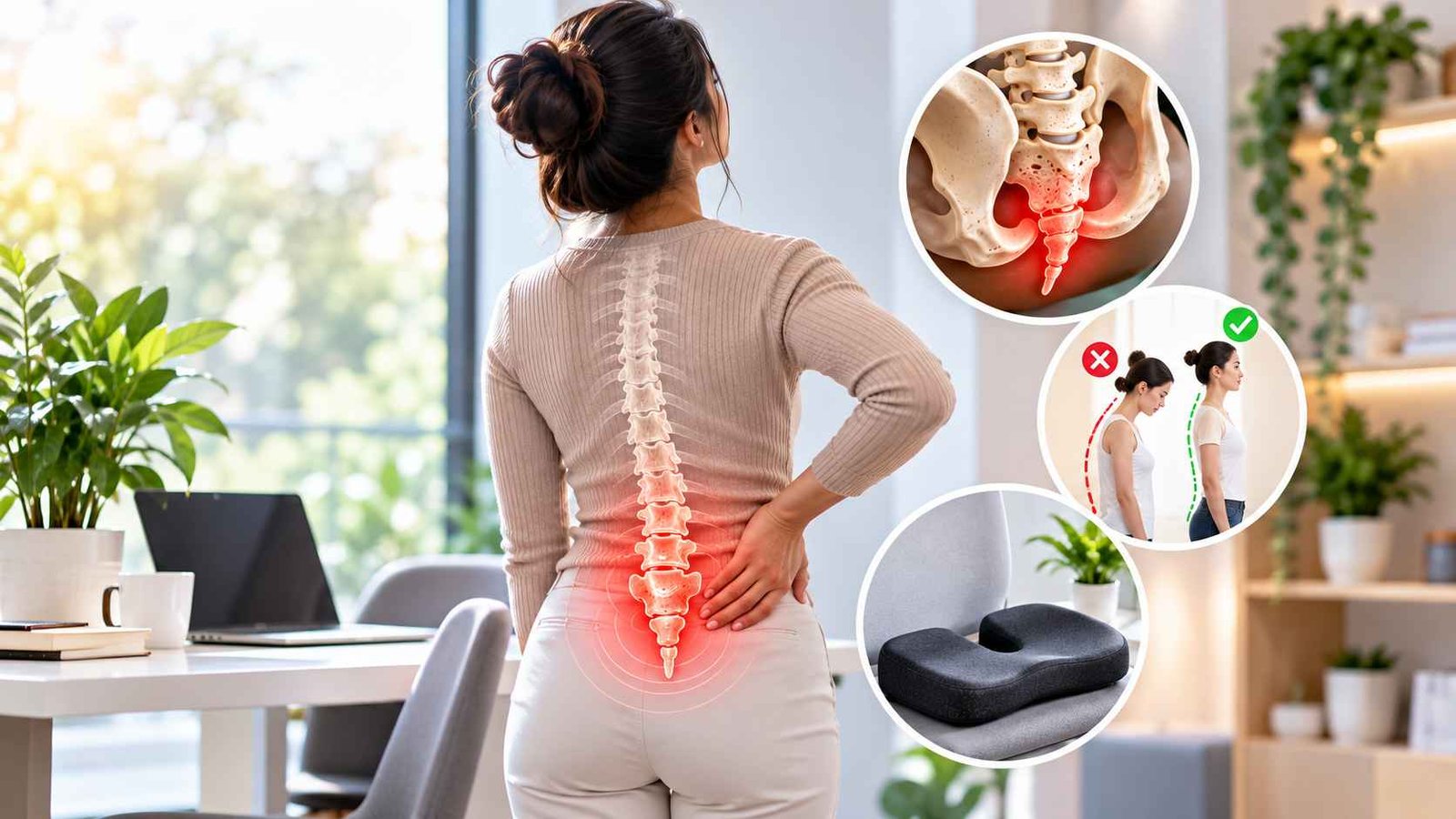
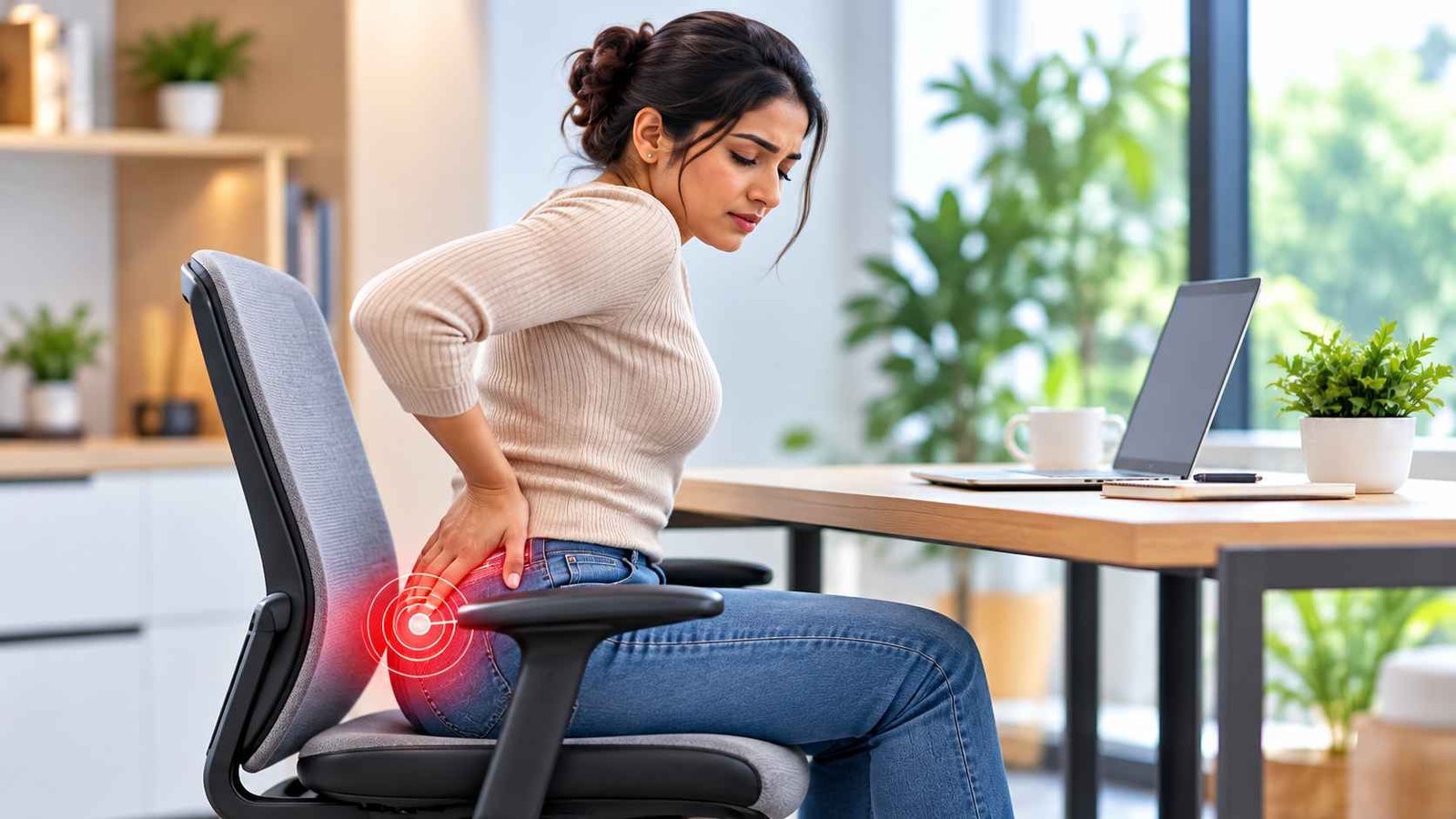
Poor posture and tailbone pain are often connected, particularly among people who spend long hours sitting at desks, working on computers, or using mobile devices. Sitting in an uncomfortable position for extended periods can increase pressure around the coccyx, potentially contributing to pain and discomfort.
The tailbone, medically known as the coccyx, is located at the bottom of the spine. Although small, it plays an important role in supporting surrounding ligaments and muscles and helping distribute weight while sitting.
When sitting posture places excessive pressure on the coccyx, some individuals may experience discomfort that gradually becomes more noticeable during everyday activities.
However, poor posture is not the only cause of tailbone pain. Injuries, prolonged sitting, pregnancy-related changes, and other medical conditions may also contribute.
Understanding the relationship between poor posture and tailbone pain can help you recognize potential triggers, improve your sitting habits, and determine when professional assessment may be necessary.
Table of Contents
- How Poor Posture Affects Your Tailbone
- Common Sitting Habits That Can Trigger Tailbone Pain
- Signs That Your Posture May Be Contributing to Tailbone Pain
- How to Correct Poor Posture and Reduce Tailbone Pain
- Can Poor Posture Cause Chronic Tailbone Pain?
- When to Seek Professional Help
- Frequently Asked Questions
- Conclusion
How Poor Posture Affects Your Tailbone
The coccyx is a small, triangular structure at the base of the spine. It serves as an attachment point for several muscles, tendons, and ligaments.
When sitting, body weight is primarily supported by the sitting bones and surrounding tissues. However, certain sitting positions can increase pressure around the tailbone.
Here are three ways poor posture may contribute to coccyx discomfort.
1. Increased Pressure on the Coccyx
Slouching or leaning backward while sitting can change how body weight is distributed across the pelvis.
For some individuals, these positions increase pressure around the coccyx, particularly when sitting on hard or poorly cushioned surfaces.
Prolonged pressure may aggravate an already sensitive tailbone and contribute to discomfort.
People who experience symptoms after sitting for extended periods may benefit from understanding the causes and management of tailbone pain when sitting for long hours.
2. Changes in Spinal and Pelvic Alignment
Sitting posture influences the position of the pelvis and lower spine.
When someone repeatedly slouches or sits with the pelvis tilted backward, pressure distribution around the lower back and tailbone may change.
Although poor posture does not necessarily cause structural misalignment of the coccyx, certain positions may aggravate existing tailbone pain.
Maintaining a comfortable, supported sitting position may help reduce unnecessary strain.
3. Muscle Tension and Reduced Support
Prolonged sitting and limited movement can contribute to stiffness and discomfort in muscles surrounding the lower back, hips, and pelvis.
These muscles help support movement and maintain comfortable positioning during everyday activities.
Muscle tension or reduced endurance may make it more difficult to maintain a comfortable sitting position for extended periods.
However, not every case of tailbone pain is caused by muscle weakness or poor posture.
For a broader understanding of the condition, read our guide to coccydynia causes, symptoms, and treatment options.
Common Sitting Habits That Can Trigger Tailbone Pain
Certain everyday habits may increase discomfort around the coccyx, particularly in individuals who already experience tailbone sensitivity.
Slouching While Working
Sitting with a rounded lower back and a backward-tilted pelvis may increase pressure around the tailbone.
This is especially common when working on laptops or using chairs without adequate back support.
Sitting for Long Hours Without Breaks
Remaining seated for several hours without changing position can place sustained pressure on the same tissues.
Even when sitting posture is comfortable, prolonged pressure may aggravate existing coccyx pain.
Sitting on Hard Surfaces
Hard chairs, benches, and other poorly cushioned surfaces may increase localized pressure around the tailbone.
Individuals with coccyx tenderness may notice greater discomfort on these surfaces.
Using Poorly Adjusted Office Chairs
A chair that is too high, too low, or inadequately supportive can make it difficult to maintain a comfortable sitting position.
An unsuitable workstation may also encourage prolonged leaning or slouching.
Leaning Backward Excessively
Reclining into certain positions can increase direct pressure around the coccyx.
The effect varies depending on the chair, pelvic position, and individual anatomy.
Important: There is no single perfect sitting posture for everyone. The goal is to find a comfortable, supported position and change positions regularly.
Signs That Your Posture May Be Contributing to Tailbone Pain
Posture-related tailbone discomfort may become noticeable during or after prolonged sitting.
Common symptoms include:
- Pain or tenderness at the base of the spine.
- Discomfort after sitting for extended periods.
- Increased pain when sitting on hard surfaces.
- Pain when transitioning from sitting to standing.
- Discomfort that changes with sitting position.
- Associated stiffness or aching around the lower back and hips.
Symptoms that improve after standing, walking, or changing position may suggest that sitting pressure contributes to the discomfort.
However, these symptoms do not confirm that poor posture is the underlying cause.
Tailbone pain may also result from injury, inflammation, joint-related problems, or other conditions.
Numbness, tingling, or weakness should not automatically be attributed to posture-related coccyx pain. These symptoms may require medical evaluation, particularly if they are new or worsening.
How to Correct Poor Posture and Reduce Tailbone Pain
Improving sitting habits and reducing prolonged pressure around the coccyx may help manage posture-related discomfort.
The following strategies can be incorporated into everyday activities.
1. Maintain a Comfortable Sitting Position
When sitting at a desk:
- Keep both feet comfortably supported on the floor or a footrest.
- Position your knees at approximately hip level.
- Support your lower back with the chair.
- Keep your shoulders relaxed.
- Avoid prolonged slouching or excessive backward leaning.
- Adjust your position whenever discomfort develops.
You do not need to maintain a rigid, perfectly upright posture throughout the day.
A comfortable, supported position that allows regular movement is generally more practical.
2. Use a Coccyx Relief Cushion
A coccyx cushion may help reduce direct pressure around the tailbone.
These cushions commonly feature a cut-out section at the back, allowing the coccyx to remain relatively unloaded while sitting.
When selecting a cushion:
- Choose one that provides stable support.
- Ensure the cut-out is positioned beneath the tailbone.
- Avoid cushions that increase discomfort.
- Check whether the cushion works with your chair height.
A cushion may help manage symptoms, but it does not treat every underlying cause of coccydynia.
3. Take Regular Movement Breaks
Prolonged sitting can aggravate tailbone discomfort, even when your posture is relatively comfortable.
Try standing, walking, or gently changing position every 30–60 minutes, depending on your symptoms and daily routine.
Short movement breaks may help reduce continuous pressure around the coccyx.
If sitting becomes painful sooner, take breaks more frequently.
4. Improve Core and Pelvic Muscle Support
Exercises that improve trunk and pelvic muscle strength or endurance may support comfortable movement and sitting.
Depending on individual needs, a physiotherapist may recommend exercises such as:
- Gentle pelvic tilts.
- Modified core-stabilization exercises.
- Comfortable hip mobility exercises.
- Individualized strengthening exercises.
Exercises should be selected according to the cause of pain and your physical condition.
Avoid continuing any exercise that increases tailbone pain.
5. Adjust Your Workstation
A poorly arranged workstation may encourage uncomfortable sitting habits.
Consider the following adjustments:
- Position the computer screen near eye level.
- Keep the keyboard and mouse within comfortable reach.
- Use a chair with adequate back support.
- Adjust the seat height so your feet are supported.
- Avoid sitting on the edge of the chair for prolonged periods.
- Change your position regularly throughout the workday.
Small ergonomic adjustments may make sitting more comfortable and reduce sustained pressure.
6. Avoid Prolonged Pressure on the Tailbone
If a particular position aggravates your symptoms, reduce the time spent in that position.
Alternate between sitting, standing, and walking when practical.
People with persistent coccyx discomfort may also benefit from individualized guidance on activity modification and pressure management.
Can Poor Posture Cause Chronic Tailbone Pain?
Poor posture and prolonged sitting may contribute to persistent tailbone discomfort in some individuals.
However, chronic tailbone pain is not always caused by posture alone.
Other possible contributing factors include:
- Previous falls or direct injuries to the coccyx.
- Pregnancy or childbirth-related changes.
- Coccygeal joint mobility problems.
- Repetitive pressure around the tailbone.
- Pelvic floor muscle dysfunction.
- Other musculoskeletal or medical conditions.
In some cases, tailbone pain continues despite improvements in sitting posture.
This may indicate that additional factors require assessment.
A healthcare professional can evaluate the symptoms, medical history, and relevant physical findings to help identify potential causes.
When to Seek Professional Help
Occasional discomfort after prolonged sitting may improve with changes in posture, pressure relief, and regular movement.
However, professional assessment may be appropriate when:
- Tailbone pain persists despite changes in sitting habits.
- Pain interferes with work, sleep, or everyday activities.
- Symptoms progressively worsen.
- Pain develops after a fall or direct injury.
- Sitting and standing become increasingly uncomfortable.
- You experience recurrent or unexplained tailbone pain.
Seek urgent medical attention if tailbone or back pain is accompanied by new bladder or bowel control problems, numbness around the groin or saddle area, or significant new leg weakness.
How Tailbone Pain Is Evaluated
A clinical assessment may involve reviewing:
- The location and duration of symptoms.
- Sitting positions that increase or reduce pain.
- Previous injuries or relevant medical history.
- Movement patterns and functional limitations.
- Findings from an appropriate physical examination.
Additional investigations may be recommended when clinically indicated.
Learn more about the clinic’s tailbone pain diagnostic services.
Treatment Options for Persistent Tailbone Pain
Treatment depends on the underlying cause and severity of symptoms.
Management may involve posture modifications, pressure-relieving cushions, activity adjustments, physiotherapy, or other clinically appropriate interventions.
At Tailbone Pain Treatment Clinic, patients can explore the available coccydynia and tailbone pain treatment services.
An individualized assessment can help determine which treatment approaches may be suitable.
Frequently Asked Questions About Poor Posture and Tailbone Pain
1. Can poor posture cause tailbone pain?
Poor posture may contribute to tailbone pain by changing pressure distribution around the coccyx during sitting. However, posture is only one possible contributing factor, and persistent symptoms may have other causes.
2. Can sitting for long hours cause coccyx pain?
Yes. Prolonged sitting can increase sustained pressure around the coccyx and aggravate existing tailbone sensitivity, particularly on hard surfaces or in uncomfortable positions.
3. What is the best sitting posture for tailbone pain?
A comfortable sitting position with adequate back support, supported feet, and reduced direct pressure around the coccyx may help. Regularly changing positions is also important.
4. Can correcting posture completely cure tailbone pain?
Correcting uncomfortable sitting habits may reduce symptoms when posture or sustained pressure contributes to the problem. However, it may not resolve pain caused by injuries, joint-related conditions, or other underlying factors.
5. Is a coccyx cushion helpful for posture-related tailbone pain?
A coccyx cushion with a rear cut-out may help reduce pressure around the tailbone while sitting. Its effectiveness varies, and it should be used as part of an appropriate management plan.
6. Can poor posture cause permanent tailbone damage?
Poor posture alone does not necessarily cause permanent structural damage to the coccyx. Nevertheless, persistent pain should be assessed rather than assuming posture is the only cause.
7. What exercises help with posture-related tailbone pain?
Gentle pelvic mobility, appropriate core strengthening, and individualized physiotherapy exercises may help some patients. Exercise selection should depend on symptoms and the underlying cause of pain.
8. When should I consult a specialist for tailbone pain?
Consider professional evaluation when pain persists, worsens, follows an injury, or interferes with normal activities. A clinician can help identify possible causes and recommend suitable management.
Conclusion
Poor posture and tailbone pain can be connected, particularly when prolonged sitting places additional pressure around the coccyx.
Improving workstation ergonomics, using appropriate seating support, taking regular movement breaks, and avoiding uncomfortable positions may help reduce symptoms.
However, persistent tailbone pain should not automatically be attributed to poor posture. Injuries, coccygeal joint problems, and other medical conditions may also contribute.
If tailbone discomfort continues despite changes to your sitting habits, a professional assessment may help identify the underlying cause and appropriate treatment options.
At Tailbone Pain Treatment Clinic, patients experiencing persistent coccyx pain can seek guidance regarding assessment and available treatment approaches.
For further information or to arrange a consultation, contact Tailbone Pain Treatment Clinic.