Fractured Tailbone: Symptoms, Treatment and Recovery Time
A fractured tailbone is an injury involving a break in the coccyx, the small bone at the bottom of the spine. It can occur after direct trauma, particularly a backward fall onto a hard surface. However, not every painful tailbone injury is a fracture. Bruising and injuries to the surrounding tissues are more common than an actual coccyx fracture. Pain following a tailbone injury can make sitting, standing up, bending and everyday activities uncomfortable. Because the symptoms of a bruised and fractured tailbone may overlap, trying to diagnose the injury based on pain alone can be difficult.
Understanding fractured tailbone symptoms, how coccyx injuries are assessed, and what treatment may involve can help you determine when professional evaluation is appropriate.
If tailbone pain continues after an injury or significantly affects daily activities, a structured coccydynia and tailbone pain treatment program may help address persistent symptoms after the underlying cause has been properly assessed.
Table of Contents
- What Is a Fractured Tailbone?
- What Causes a Tailbone Fracture?
- Fractured Tailbone Symptoms
- How Do You Know If Your Tailbone Is Fractured?
- Bruised vs Fractured Tailbone
- What Is a Hairline Fracture of the Tailbone?
- How Is a Tailbone Fracture Diagnosed?
- Does a Tailbone Fracture Need an X-Ray?
- Fractured Tailbone Treatment
- How Long Does a Fractured Tailbone Take to Heal?
- When Should You Seek Medical Attention?
- Frequently Asked Questions
What Is a Fractured Tailbone?
The coccyx, commonly known as the tailbone, is located at the lowest part of the spine below the sacrum.
A fractured tailbone means that trauma has caused a break in the coccyx. However, an important distinction is that an actual coccyx fracture is not the most common explanation for pain after a tailbone injury.
According to MedlinePlus, true fractures of the coccyx are uncommon, with tailbone trauma more often involving bruising of the bone or injury to surrounding ligaments. MedlinePlus
This is why severe pain after falling on the tailbone does not automatically mean the bone has fractured.
What Causes a Tailbone Fracture?
A tailbone fracture usually follows direct trauma to the coccyx.
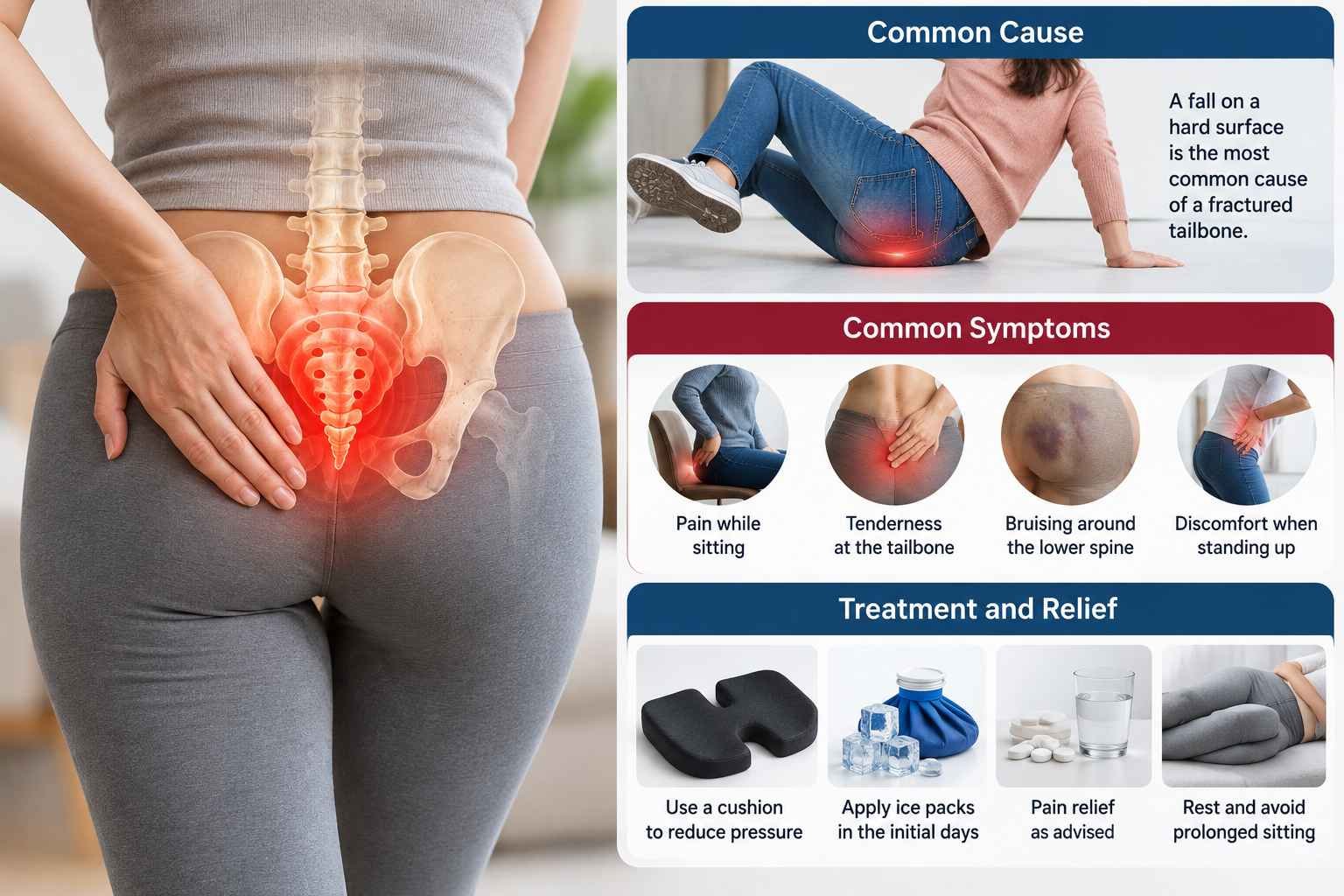
A backward fall onto a hard surface is a common mechanism of tailbone injury.
Potential situations include:
- Slipping and landing directly on the buttocks
- Falling on stairs or another hard surface
- Sports-related trauma
- Accidents involving direct impact around the lower spine
- Other significant trauma to the coccyx region
The severity of pain alone cannot reliably determine whether the coccyx is bruised or fractured.
Fractured Tailbone Symptoms
Symptoms following a coccyx fracture or other significant tailbone injury are usually concentrated around the lowest part of the spine.
Possible fractured tailbone symptoms include:
- Localized pain around the coccyx
- Tenderness at the base of the spine
- Pain that becomes worse when sitting
- Discomfort when direct pressure is placed on the tailbone
- Bruising around the lower spine following trauma
- Difficulty getting comfortable while sitting
- Pain when transitioning between sitting and standing
These symptoms are not specific enough to confirm a fracture, because bruising and other coccyx injuries can produce similar complaints.
How Do You Know If Your Tailbone Is Fractured?
One of the most common questions following a fall is: How do you know if you fractured your tailbone?
Symptoms alone usually cannot provide a definitive answer.
For example, both a bruised coccyx and a fracture can cause pain when sitting, tenderness and discomfort after trauma. The mechanism of injury, severity and progression of symptoms, physical examination findings and, where clinically appropriate, imaging may all contribute to the diagnosis.
If pain is significant, persistent or began after substantial trauma, professional assessment is preferable to assuming that the coccyx is either bruised or broken.
Detailed assessment of persistent coccyx problems may be available through tailbone pain diagnostic services.
Bruised vs Fractured Tailbone
A bruised tailbone and fractured tailbone can feel similar, particularly during the first days after an injury.
A bruise involves trauma without a break in the bone, while a fracture involves an actual break.
Both may produce:
- Coccyx tenderness
- Pain with sitting
- Pain after a fall
- Local bruising
- Discomfort when pressure is applied
Because of this overlap, you cannot reliably determine bruised vs fractured tailbone simply by how painful the injury feels.
This distinction is particularly important because MedlinePlus reports that most tailbone injuries involve bruising or ligament injury rather than a true fracture. MedlinePlus
What Is a Hairline Fracture of the Tailbone?
A suspected small fracture can still produce localized pain and tenderness following trauma.
However, terms such as “hairline fracture” should not be self-diagnosed based on symptoms alone. A clinician can determine whether imaging or further evaluation is appropriate based on the injury and examination.
How Is a Tailbone Fracture Diagnosed?
Diagnosis starts with understanding how the injury happened and where the pain is located.
A healthcare professional may ask about:
- Whether you fell directly onto the buttocks
- When the injury occurred
- Where the pain is most intense
- Whether sitting increases the pain
- Whether symptoms are improving or worsening
- Whether there are neurological or other concerning symptoms
A physical examination can then help assess the painful area and determine whether additional investigation is warranted.
Imaging is not necessarily required for every episode of tailbone pain. The decision depends on the clinical situation and suspected injury.
Does a Tailbone Fracture Need an X-Ray?
An X-ray or other imaging test may be considered when a fracture is suspected, but imaging decisions should be individualized.
For fractures generally, MedlinePlus notes that healthcare providers use physical examination and the history of the injury and may order an X-ray or other imaging to determine whether a bone is broken.
With coccyx injuries specifically, the usefulness and necessity of imaging depend on the circumstances. A clinician can decide whether an X-ray or another investigation is appropriate rather than imaging being automatically required for every painful tailbone.
Fractured Tailbone Treatment
Fractured tailbone treatment depends on the nature and severity of the injury and the person’s symptoms.
For uncomplicated tailbone trauma, management commonly focuses on reducing pressure and controlling symptoms while the injured area recovers.
MedlinePlus advises pressure relief using appropriate cushioning and lists pain medicines and measures to prevent constipation among first-aid approaches for tailbone trauma.
Conservative management may therefore involve:
- Reducing activities that aggravate the injured area
- Avoiding prolonged direct pressure on the coccyx
- Appropriate cushioning while sitting
- Cold or heat measures when advised
- Appropriate pain management
- Managing constipation if bowel movements aggravate pain
- Gradually returning to normal activity as symptoms improve
Medication suitability varies between individuals, so people with other medical conditions or those taking other medicines should follow their healthcare professional’s advice.
Why Treatment Should Match the Diagnosis
Treatment should not be based solely on the assumption that every post-injury tailbone pain is a fracture.
Persistent coccyx pain can involve different mechanical and soft-tissue factors. Once serious injury has been assessed appropriately, ongoing symptoms may require a broader approach to pain, movement and function.
How Long Does a Fractured Tailbone Take to Heal?
Fractured tailbone recovery time varies, and it is better not to promise an exact healing period for every patient.
Recovery can depend on factors such as:
- Severity of the injury
- Whether an actual fracture is present
- Continued pressure on the coccyx
- General health
- Other injuries
- Activity levels during recovery
- Whether symptoms are improving as expected
Because coccyx pain is strongly affected by pressure, people may continue to notice discomfort with sitting even while the injured tissues are recovering.
The more useful question is therefore not simply “How many days does a fractured tailbone take to heal?” but whether pain and function are progressively improving over time.
If symptoms remain unchanged, worsen, or continue substantially longer than expected, reassessment may be appropriate.
When Should You Seek Medical Attention?
Tailbone pain following a relatively minor injury may sometimes improve with conservative measures. However, some situations require medical attention.
Seek prompt medical assessment if:
- Pain is severe
- The injury followed significant trauma
- You cannot move normally following the injury
- There is concern about a spinal injury
- Symptoms are progressively worsening
- You develop numbness, weakness or other neurological symptoms
- Pain remains persistent instead of gradually improving
- The diagnosis is uncertain
MedlinePlus specifically recommends emergency help when spinal cord injury is suspected, a person cannot move, or pain is severe.
Frequently Asked Questions
Can a fractured tailbone heal on its own?
Some coccyx injuries improve with conservative management, but suspected fractures should not simply be assumed to heal normally without assessment when symptoms are significant or persistent. A healthcare professional can determine the nature of the injury and whether additional treatment is required.
How do I know if my tailbone is bruised or fractured?
The symptoms can overlap considerably. Both may cause tenderness, pain while sitting and discomfort after a fall. Clinical evaluation, and imaging when appropriate, may be needed to distinguish the injury.
What does a fractured tailbone feel like?
A coccyx injury may produce localized pain and tenderness, particularly when sitting or putting pressure on the tailbone. These symptoms do not by themselves prove that a fracture is present.
Can you walk with a fractured tailbone?
Some people with coccyx injuries may still be able to walk because walking does not place the same direct pressure on the tailbone as sitting. However, the ability to walk does not confirm or rule out a fracture.
Does a fractured tailbone require an X-ray?
Not every tailbone injury automatically requires an X-ray. A healthcare professional can determine whether imaging is appropriate based on the mechanism of injury, examination and symptoms.
How long does a fractured tailbone take to heal?
Recovery varies according to the injury and the individual. Rather than relying on a fixed timeline, monitor whether pain and function are progressively improving and seek reassessment if symptoms persist or worsen.
What should I avoid with an injured tailbone?
Activities that repeatedly place direct pressure on the painful coccyx may aggravate symptoms. Your clinician can provide activity recommendations based on the severity and type of injury.
Final Thoughts
A fractured tailbone can cause significant discomfort, particularly after direct trauma to the coccyx. However, an important point is that pain after a fall does not automatically mean the tailbone is broken—bruising and surrounding soft-tissue injuries are more common than true coccyx fractures.
If you develop persistent fractured tailbone symptoms, severe pain, or difficulty returning to normal activities after an injury, appropriate evaluation can help establish the diagnosis and guide treatment.
For ongoing coccyx pain after the initial injury has been assessed, coccydynia and tailbone pain treatment can address persistent symptoms based on the underlying problem.