Bruised Tailbone: Symptoms, Healing Time and Treatment

A bruised tailbone can make everyday activities such as sitting, standing up, driving, and sleeping uncomfortable. The injury often develops after a fall, direct impact, or repeated pressure on the lower spine. Although a bruised coccyx may improve with conservative care, recovery time varies depending on the severity of the injury and individual health factors.
One common concern is whether tailbone pain is caused by bruising or a fracture. Both conditions can produce similar symptoms, making it difficult to identify the exact injury without a clinical assessment.
Understanding the symptoms, healing process, and appropriate treatment options can help you manage discomfort while avoiding activities that may aggravate the injured area.
In this guide, we explain what a bruised tailbone is, how long recovery may take, what treatment options may help, and when professional medical evaluation is necessary.
Table of Contents
What Is a Bruised Tailbone?
What Causes a Bruised Tailbone?
7 Common Symptoms of a Bruised Tailbone
Bruised Tailbone vs. Fractured Tailbone
How Long Does a Bruised Tailbone Take to Heal?
How to Treat a Bruised Tailbone
Best Sitting and Sleeping Positions for Recovery
What Should You Avoid With a Bruised Tailbone?
When Should You See a Doctor?
Frequently Asked Questions
Conclusion
What Is a Bruised Tailbone?
A bruised tailbone is an injury involving the tissues around the coccyx, the small bone located at the bottom of the spine.
The coccyx helps support body weight while sitting and provides attachment points for several muscles and ligaments. A fall or direct impact can injure the surrounding soft tissues, resulting in pain, tenderness, and sometimes swelling.
A bruised coccyx does not necessarily mean the bone is broken. However, bruising and fractures can cause overlapping symptoms, and the difference may not be obvious from pain severity alone.
Some people experience discomfort only when sitting, while others notice pain during movement or transitions between sitting and standing.
What Causes a Bruised Tailbone?
Several situations can contribute to a bruised tailbone.
1. Falling Directly Onto the Buttocks
A backward fall onto a hard surface is a common cause of coccyx injury. The impact can compress or injure the tissues surrounding the tailbone.
2. Sports-Related Injuries
Activities such as skating, cycling, horse riding, and contact sports may expose the coccyx to falls or repeated pressure.
3. Prolonged Sitting on Hard Surfaces
Extended sitting can irritate sensitive tissues around the coccyx. Although prolonged sitting does not always cause an actual bruise, it can aggravate an existing injury and produce similar discomfort.
4. Repeated Pressure or Minor Trauma
Repetitive pressure during certain activities may contribute to irritation around the lower spine, particularly when the area is already sensitive.
5. Childbirth-Related Trauma
During childbirth, pressure on the pelvic structures may occasionally injure the coccyx or surrounding tissues. Persistent pain after delivery requires an individualized assessment.
For a broader explanation of injury-related and non-injury-related symptoms, read our guide to coccydynia causes, symptoms, and treatment options.
7 Common Symptoms of a Bruised Tailbone
The symptoms of a bruised coccyx vary depending on the injury and the surrounding tissues involved.
1. Pain at the Base of the Spine
Pain is usually concentrated near the bottom of the spine, just above the crease between the buttocks.
2. Pain When Sitting
Sitting, especially on firm surfaces, can increase pressure around the injured area and worsen discomfort.
3. Tenderness Around the Coccyx
The tissues near the tailbone may feel sensitive or painful when pressure is applied.
4. Pain When Standing Up
Moving from sitting to standing changes the pressure on the coccyx and can trigger a sharp or aching sensation.
5. Swelling Around the Injured Area
Some injuries cause localized swelling. Visible bruising may also occur, although it is not always present.
6. Discomfort During Daily Activities
Driving, bending, certain exercises, and prolonged sitting may become uncomfortable while the injury heals.
7. Difficulty Finding a Comfortable Sleeping Position
Pressure on the injured area may make certain sleeping positions uncomfortable, particularly when lying directly on the back.
Important: These symptoms are not specific to bruising. Fractures, dislocations, and other conditions affecting the coccyx may cause similar pain.
Bruised Tailbone vs. Fractured Tailbone: What Is the Difference?
A bruised tailbone generally involves injury to the surrounding soft tissues, while a fractured tailbone involves a break in the coccyx bone.
Both injuries may follow a fall or direct impact and can cause pain while sitting or changing positions.
| Feature | Bruised Tailbone | Fractured Tailbone |
|---|---|---|
| Type of injury | Soft-tissue injury around the coccyx | Break in the coccyx bone |
| Common cause | Fall, impact, or direct trauma | Fall or significant direct trauma |
| Pain while sitting | Common | Common |
| Tenderness | Common | Common |
| Swelling | May occur | May occur |
| Recovery | Often improves over several weeks | May require a longer recovery period |
| Diagnosis | Clinical assessment | Clinical assessment, with imaging when indicated |
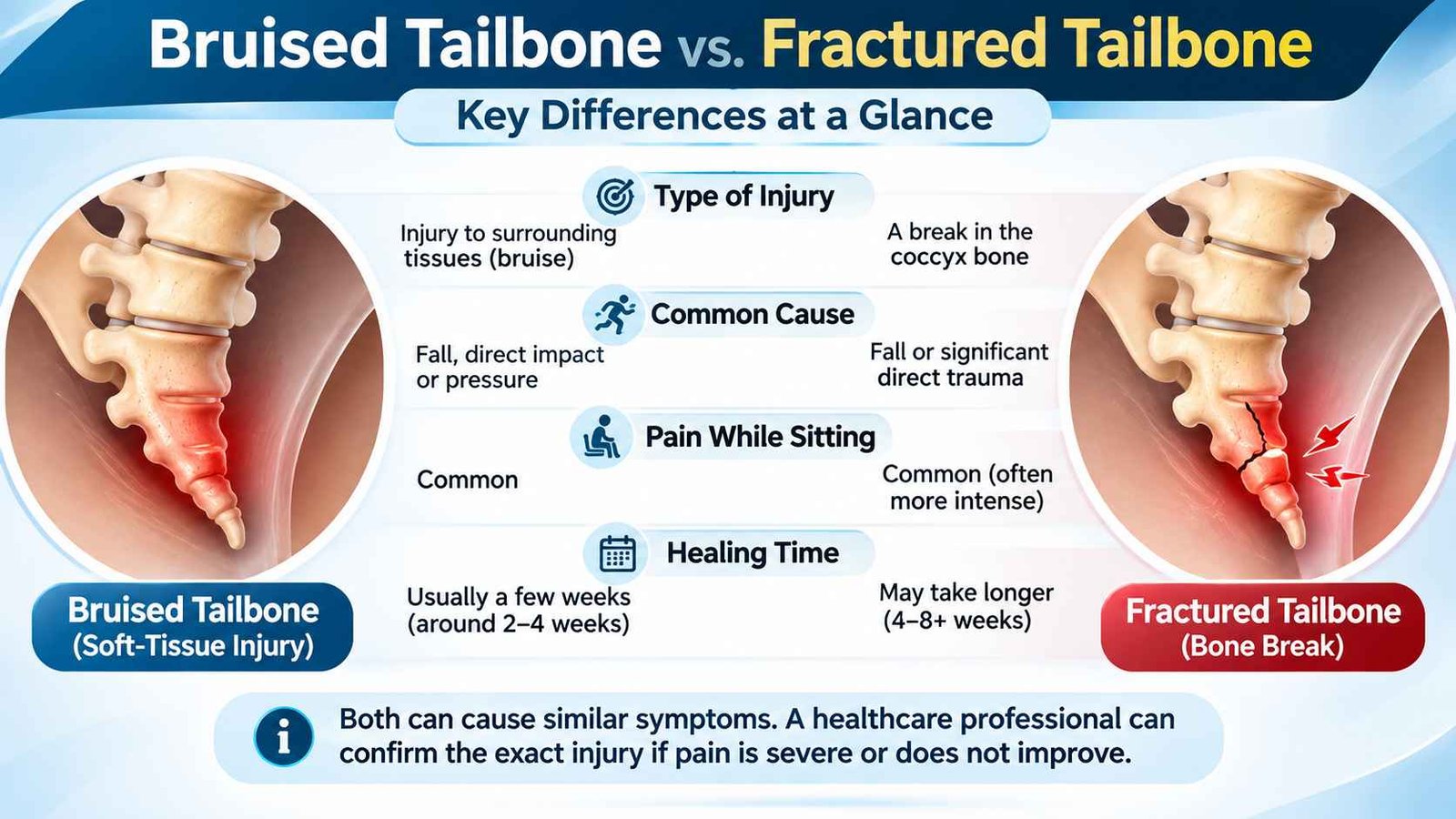
Pain intensity alone cannot reliably distinguish a bruise from a fracture.
If symptoms follow a significant injury, persist, or become more severe, a healthcare professional may recommend further evaluation.
For more information about bone injuries, read our dedicated article on fractured tailbone symptoms, treatment, and recovery.
How Long Does a Bruised Tailbone Take to Heal?
One of the most frequently asked questions is: How long does a bruised tailbone take to heal?
A mild soft-tissue injury around the coccyx may improve within approximately four weeks, although some people recover sooner and others experience symptoms for longer.
Recovery depends on several factors, including:
Severity of the original injury
Repeated pressure on the coccyx
Sitting duration and daily activities
Presence of other musculoskeletal problems
Individual healing response
Whether the injury involves bruising, fracture, or another condition
Early Recovery
During the first several days, pain and tenderness may be more noticeable, particularly while sitting or changing positions.
Reducing pressure on the injured area and modifying painful activities may help during this period.
Gradual Improvement
Over the following weeks, discomfort may decrease as the injured tissues recover.
Sitting tolerance and everyday movement may gradually improve, although recovery is not always linear.
Persistent Pain
If symptoms continue beyond the expected recovery period, worsen, or interfere with normal activities, further clinical assessment is appropriate.
Persistent pain should not automatically be assumed to be a bruise. Other causes of coccydynia may need to be considered.
How to Treat a Bruised Tailbone
Most uncomplicated bruised-tailbone injuries are initially managed with conservative measures rather than surgery.
The goal is to reduce unnecessary pressure, manage discomfort, and support a gradual return to normal activity.
1. Reduce Direct Pressure on the Tailbone
Avoid prolonged sitting on hard surfaces, particularly during the early stages of recovery.
Changing positions regularly may help reduce pressure around the injured coccyx.
2. Use Cold Compresses After a Recent Injury
A cold pack wrapped in a towel may help manage discomfort and swelling during the first 24–48 hours after an injury.
Apply it for approximately 15–20 minutes at a time, and avoid placing ice directly on the skin.
3. Consider Appropriate Pain-Relieving Medicines
Some people may benefit from short-term pain-relieving medicines, depending on their medical history and individual circumstances.
Options may include paracetamol or certain anti-inflammatory medicines, but these are not suitable for everyone.
Medication should be used according to professional advice or product instructions, particularly if you have other medical conditions or take regular medicines.
For a detailed explanation of medication options and precautions, read our guide on medicine for tailbone pain.
4. Use Suitable Sitting Support
A coccyx cut-out cushion may help reduce direct pressure on the injured area.
The most appropriate cushion depends on individual comfort and sitting posture. Avoid seating arrangements that increase pain.
5. Maintain Gentle Movement
Complete bed rest is generally unnecessary for an uncomplicated injury.
Comfortable walking and gentle daily movement may help maintain mobility, provided they do not aggravate symptoms.
Avoid strenuous activities until they can be resumed comfortably or according to medical advice.
6. Consider Physiotherapy for Persistent Symptoms
If pain continues or affects normal movement, physiotherapy may be considered after appropriate assessment.
Depending on the findings, management may include:
Sitting and posture guidance
Activity modification
Gentle movement exercises
Functional rehabilitation
Assessment of surrounding muscular or pelvic factors
Not every bruised tailbone requires physiotherapy, and treatment should be selected according to the diagnosis.
Learn more about coccydynia and tailbone pain treatment in Bangalore.
Best Sitting and Sleeping Positions for Bruised Tailbone Recovery
Positioning can influence the amount of pressure placed on an injured coccyx.
Sitting With a Bruised Tailbone
Try the following strategies:
Choose a supportive chair.
Consider a coccyx cut-out cushion.
Avoid prolonged sitting without breaks.
Keep your feet supported.
Change positions when discomfort increases.
Avoid repeatedly leaning directly onto the painful area.
The most comfortable sitting position varies from person to person.
Sleeping With a Bruised Tailbone
Sleeping on your side may reduce direct pressure on the coccyx.
A pillow between the knees may improve comfort for some people.
If lying on your back aggravates pain, consider a position that reduces pressure on the injured area while maintaining comfortable spinal alignment.
There is no single sleeping position that works for everyone.
What Should You Avoid With a Bruised Tailbone?
Certain activities can aggravate symptoms or make recovery more uncomfortable.
During the healing period, consider limiting:
Prolonged sitting on hard surfaces
Cycling or other activities involving direct coccyx pressure
High-impact exercise that increases pain
Repeated pressure or massage directly over the injured area
Heavy lifting or strenuous movements that worsen symptoms
Returning too quickly to painful activities
Avoid attempting to manually reposition the coccyx yourself.
If pain persists despite activity modification, seek professional assessment rather than repeatedly attempting treatments that worsen symptoms.
When Should You See a Doctor for a Bruised Tailbone?
Although mild coccyx injuries may improve with time, some symptoms require medical evaluation.
Consider consulting a healthcare professional if:
Pain remains significant or does not gradually improve.
Sitting, walking, or everyday activities become difficult.
Symptoms follow a significant fall or accident.
Pain becomes progressively worse.
You develop unexplained swelling, a lump, or persistent tenderness.
You experience fever or other symptoms suggesting an underlying medical problem.
Seek urgent medical attention if tailbone or lower-back pain is accompanied by new bowel or bladder dysfunction, numbness around the groin or saddle area, or new or progressive leg weakness.
These symptoms may indicate a more serious condition requiring prompt assessment.
For additional patient information about coccyx pain and available treatments, refer to the NHS guide to tailbone pain.
Frequently Asked Questions About Bruised Tailbone
1. How do I know if my tailbone is bruised or broken?
Both conditions can cause pain while sitting, tenderness, and discomfort after a fall. Symptoms alone cannot reliably distinguish bruising from a fracture. A healthcare professional can assess the injury and determine whether imaging is needed.
2. How long does a bruised tailbone take to heal?
A mild bruised tailbone may improve within approximately four weeks. However, recovery varies, and persistent or worsening pain should be evaluated.
3. Can you walk with a bruised tailbone?
Many people can continue walking with a mild coccyx injury. Gentle movement may be tolerated, but activities that significantly increase pain should be modified.
4. Is heat or ice better for a bruised tailbone?
Cold packs are commonly used shortly after an injury to manage pain and swelling. Heat may feel comfortable for some people later in recovery, particularly when surrounding muscles are tense. Avoid extreme temperatures and direct skin contact.
5. Can a bruised tailbone heal without surgery?
Yes. Most uncomplicated soft-tissue injuries around the coccyx improve with conservative care. Surgery is not a routine treatment for a bruised tailbone.
6. Does a bruised tailbone hurt more when sitting?
Yes. Sitting places pressure around the coccyx, which can aggravate injured tissues. A supportive chair, appropriate cushion, and regular movement breaks may help.
7. Can a bruised tailbone cause long-term pain?
Some people experience persistent coccyx pain after an injury. However, ongoing symptoms do not necessarily mean the bruise has failed to heal. Other contributing factors may need clinical assessment.
8. Should I exercise with a bruised tailbone?
Gentle activities may be appropriate if they do not worsen symptoms. High-impact exercise or movements that place direct pressure on the coccyx may need to be avoided temporarily.
Conclusion
A bruised tailbone can cause considerable discomfort during sitting, movement, and everyday activities. Although mild injuries often improve with conservative care, recovery depends on the severity of the injury and individual circumstances.
Reducing direct pressure, modifying painful activities, using appropriate sitting support, and gradually returning to normal movement may help manage symptoms.
It is also important to recognize that bruising, fractures, and other coccyx conditions can produce similar symptoms. Persistent or worsening pain should be professionally assessed rather than assumed to be a simple bruise.
If tailbone pain is affecting your daily activities or is not improving, you can contact Tailbone Pain Treatment Clinic for an individualized assessment in Bangalore.
Medical Disclaimer: This article is for educational purposes only and is not a substitute for professional medical advice, diagnosis, or treatment. Consult a qualified healthcare professional for concerns about a tailbone injury.